

Journal of Hematology & Thrombosis
Download PDF
Study Population and Sample Size
A total of 3,00,000 blood grouping samples received for routine immunohematology evaluation during the study period were retrospectively reviewed. Samples were received from diverse clinical settings including outpatient, inpatient, antenatal, pre-transfusion, and referral laboratory services.
Only samples demonstrating serological discrepancies during routine ABO and/or Rh blood grouping were included for detailed analysis.
1. Samples demonstrate serological discrepancies during routine ABO and/or Rh blood grouping.
2. Cases requiring additional immunohematology workup for fi nal blood group interpretation.
3. Samples with complete laboratory records and discrepancy resolution data.
1. Hemolyzed samples or specimens showing inadequate sample quality.
2. Improperly labelled or contaminated samples.
3. Samples with insuffi cient quantity for complete discrepancy workup.
4. Cases with incomplete serological or laboratory documentation.
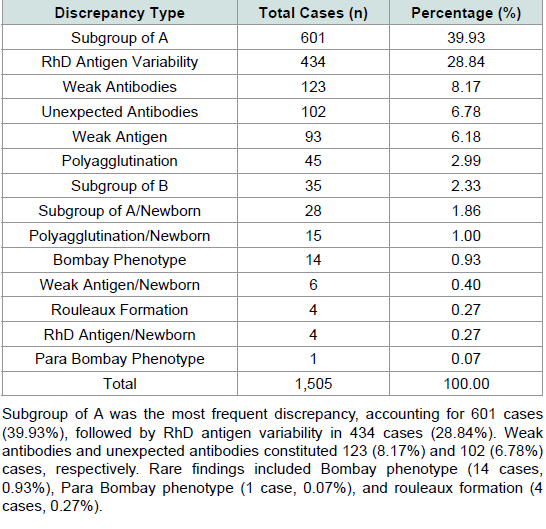 Table 1:Overall Distribution of Blood Group Discrepancies
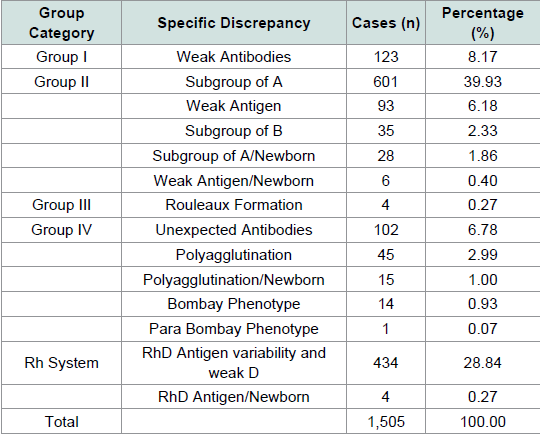 Table 2:Group-wise Classification of Blood Group Discrepancies
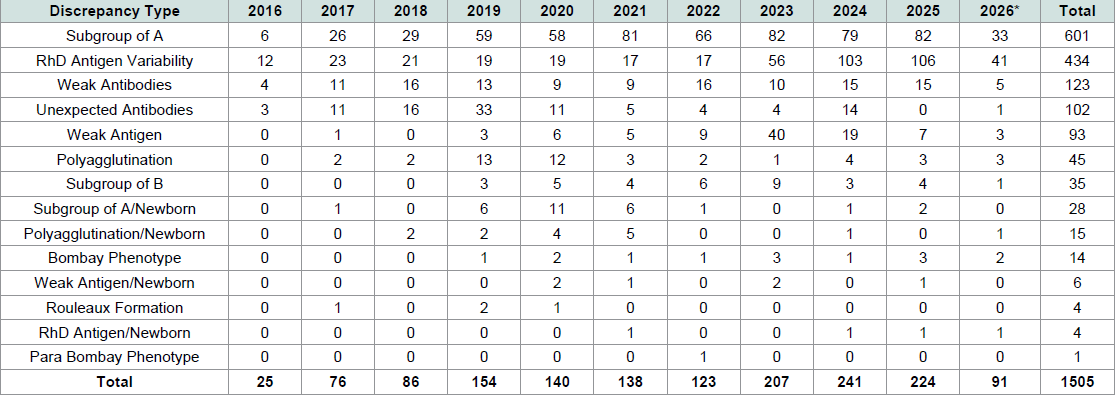 Table 3: Year-wise Distribution of Blood Group Discrepancies (2016–2026)
First, the large sample size of 3,00,000 blood grouping samples and decade-long study duration provide robust epidemiological and serological data.
Second, unlike many previously published donor-based studies, the present work represents a high-volume laboratory-based discrepancy analysis involving both ABO and Rh discrepancies.
Third, the use of EMT-based automated blood grouping provides contemporary relevance and reflects current laboratory practices. Finally, inclusion of rare phenotypes and Rh discrepancies provides a broader perspective of discrepancy burden encountered in referral immunohematology laboratories.
Research Article
Beyond Routine Typing: Evaluation of Decade-Long Retrospective Analysis of ABO and Rh Blood Group Discrepancies in a High-Volume National Reference Laboratory
Gupta A*, Lal SK, Samkaria A, Singh KK, Bhardwaj S, Jaine NS, Nakra R and Lal V
Department of Hematology, Dr Lal Path Labs, National Reference Lab, New Delhi, India and Diagast
* Address for Correspondence:Dr Ajay Gupta, Department of Hematology, Dr Lal Path Labs, National Reference Lab, New Delhi, India and Diagast. EMail Id: ajay.gupta@lalpathlabs.com
Submission: 05 May, 2026
Accepted: 13 June, 2026
Published: 17 June, 2026
Copyright: © 2026 Gupta A, et al. This is an open access article
distributed under the Creative Commons Attribution License, which
permits unrestricted use, distribution, and reproduction in any medium,
provided the original work is properly cited.
Introduction
The ABO and Rh blood group systems constitute the foundation
of modern transfusion medicine and remain the most frequently
performed investigation in immunohematology laboratories
worldwide. Accurate blood group determination is indispensable
for ensuring safe blood transfusion practice, organ transplantation
compatibility, antenatal monitoring, and emergency clinical
interventions. Any inconsistency between forward and reverse
blood grouping or unexpected Rh typing reactions poses signifi cant
diagnostic and operational challenges requiring prompt investigation
and resolution.
The ABO blood group system, fi rst described by Karl Landsteiner
[4] revolutionized transfusion medicine by establishing the
immunological basis of blood compatibility. Determination of the
ABO blood group involves two complementary procedures ie- forward
grouping which identifi es A and B antigens on red blood cells and
reverse grouping which detects corresponding naturally occurring
antibodies in plasma or serum. Concordance between these two
reactions forms the basis of accurate ABO assignment. Similarly, Rh
blood grouping, particularly Rh D antigen determination, is critical
because of its strong immunogenicity and major role in hemolytic
transfusion reactions and hemolytic disease of the fetus and newborn.
Blood group discrepancies occur when unexpected or inconsistent
serological reactions are observed during routine ABO or Rh typing.
Th ese discrepancies may arise due to weak or missing antibodies,
diminished antigen expression, plasma protein abnormalities,
autoantibodies, alloantibodies, recent transfusion, pregnancy,
hematological disorders, or technical factors. Traditionally, ABO
discrepancies are classified into four major groups.
Group I discrepancies involving weak or missing antibodies aff ecting reverse grouping.
Group II discrepancies involving weak or missing antigens aff ecting forward grouping.
Group III discrepancies resulting from plasma or protein abnormalities causing pseudo agglutination.
Group IV discrepancies which encompasses miscellaneous causes including unexpected antibodies and rare phenotypes. Rh discrepancies constitute a distinct category commonly related to weak D or partial D antigen expression. [3]
Group I discrepancies involving weak or missing antibodies aff ecting reverse grouping.
Group II discrepancies involving weak or missing antigens aff ecting forward grouping.
Group III discrepancies resulting from plasma or protein abnormalities causing pseudo agglutination.
Group IV discrepancies which encompasses miscellaneous causes including unexpected antibodies and rare phenotypes. Rh discrepancies constitute a distinct category commonly related to weak D or partial D antigen expression. [3]
Failure to recognize and resolve these discrepancies may lead to
erroneous blood group assignment, delayed transfusion support and
potentially severe transfusion-related complications. Consequently,
every discrepancy demands careful serological evaluation before fi nal
blood group reporting. Standard serological investigations such as
repeat testing, lectin studies, antibody screening, antiglobulin testing
and advanced confi rmatory techniques play an essential role in
discrepancy resolution.
Recent decades have witnessed increasing implementation of
laboratory automation in immunohematology. Automated blood
grouping systems have signifi cantly improved standardization,
sensitivity, and turnaround time while minimizing manual and
clerical errors. Erythrocytes Magnetized Technology (EMT) based
systems including Qwalys platforms, provide enhanced detection of
weak or atypical reactions and have expanded the capability of highvolume
laboratories to process large numbers of samples effi ciently.
However, enhanced sensitivity is frequently accompanied by
increased detection of atypical or weak serological reactions, thereby
necessitating specialized expertise for discrepancy interpretation and
resolution.[8]
The reported frequency of ABO blood group discrepancies varies
considerably across diff erent populations and laboratory settings,
ranging from 0.02% to 0.28% in published Indian and international
studies. Th e interpretation of discrepancy frequency should be made
in the context of the study population. Most previously published
studies have been conducted on healthy blood donor populations,
whereas the present study was performed exclusively on patient
samples referred to for routine and specialized immunohematology
investigations. Patient populations are inherently more likely to
exhibit underlying disease conditions, recent transfusion exposure,
pregnancy-related immunological alterations, hematological
disorders, autoimmune conditions, weak antigen expression, and
unexpected antibodies, all of which may increase the likelihood of
serological discrepancies.
Aim and Objectives
The present retrospective study was therefore undertaken to
evaluate the frequency, spectrum, and serological characteristics of
ABO and Rh blood group discrepancies encountered over a decade.
Th e study was carried out at the National Reference Laboratory of Dr
Lal PathLabs, Rohini, New Delhi, India, NABL and CAP-accredited
laboratory employing automated Erythrocytes Magnetized
Technology. To the best of our knowledge, this study represents one
of the largest standalone laboratory-based analyses of serological
blood group discrepancies from India and provides valuable insights
into discrepancy patterns encountered in contemporary automated
immunohematology practice.
Materials and Methods
Study Design:
This retrospective observational laboratory-based study was
conducted at National Reference lab, Dr Lal Path labs in the
Department of Hematology and Immunopathology , a high-volume
standalone National Reference Laboratory located in North India
and accredited by the National Accreditation Board for Testing
and Calibration Laboratories (NABL) and the College of American
Pathologists (CAP). Th e laboratory functions as a referral center for
immunohematology investigations and performs large-scale blood
grouping and discrepancy resolution services.
Study Duration:
Th e study included samples processed over a 10-year period from
1 July 2016 to 30 April 2026.Study Population and Sample Size
A total of 3,00,000 blood grouping samples received for routine immunohematology evaluation during the study period were retrospectively reviewed. Samples were received from diverse clinical settings including outpatient, inpatient, antenatal, pre-transfusion, and referral laboratory services.
Only samples demonstrating serological discrepancies during routine ABO and/or Rh blood grouping were included for detailed analysis.
Inclusion Criteria:
The following samples were included in the study: -1. Samples demonstrate serological discrepancies during routine ABO and/or Rh blood grouping.
2. Cases requiring additional immunohematology workup for fi nal blood group interpretation.
3. Samples with complete laboratory records and discrepancy resolution data.
Exclusion Criteria:
The following samples were excluded: -1. Hemolyzed samples or specimens showing inadequate sample quality.
2. Improperly labelled or contaminated samples.
3. Samples with insuffi cient quantity for complete discrepancy workup.
4. Cases with incomplete serological or laboratory documentation.
Routine ABO and Rh blood grouping was performed using a
fully automated immunohematology analyzer based on Erythrocytes
Magnetized Technology (EMT), Qwalys 3 (Diagast, France).
Th e EMT principle utilizes magnetized erythrocytes and automated reaction interpretation for simultaneous forward and reverse blood grouping, thereby enabling enhanced standardization, improved sensitivity, and reduced operator dependent variability. Routine testing incorporated both ABO forward grouping and reverse grouping along with RhD typing according to manufacturer instructions and laboratory standard operating procedures.
All testing procedures were performed under established internal and external quality assurance protocols in compliance with NABL and CAP accreditation requirements.
Samples demonstrating unexpected or discordant reactions during automated blood grouping were flagged by the analyzer and subjected to comprehensive serological evaluation.
Th e EMT principle utilizes magnetized erythrocytes and automated reaction interpretation for simultaneous forward and reverse blood grouping, thereby enabling enhanced standardization, improved sensitivity, and reduced operator dependent variability. Routine testing incorporated both ABO forward grouping and reverse grouping along with RhD typing according to manufacturer instructions and laboratory standard operating procedures.
All testing procedures were performed under established internal and external quality assurance protocols in compliance with NABL and CAP accreditation requirements.
Samples demonstrating unexpected or discordant reactions during automated blood grouping were flagged by the analyzer and subjected to comprehensive serological evaluation.
Initial discrepancy resolution included:
• Verification of patient/sample identification
• Review of clinical and laboratory history whenever available
• Repeat ABO and Rh typing using the same sample
• Confirmation using conventional tube technique (CTT)
Conventional tube testing was employed whenever automated
results remained inconclusive or demonstrated weak, mixed-field, or
atypical reaction patterns.
Further discrepancy workup was performed according to the
suspected underlying serological mechanism.
Additional Serological Investigations
Depending upon the nature of discrepancy encountered, one or
more of the following investigations were performed:
1. Repeat ABO and Rh typing: Repeat testing was performed to
exclude technical or clerical causes and confirm reproducibility
of reactions.
2. Direct Antiglobulin Test (DAT): DAT was performed to
detect in vivo sensitization of red blood cells with immunoglobulin
and/or complement, particularly in cases showing spontaneous
agglutination, mixed-field reactions, or suspected autoimmune
etiology.
3. Auto control: Auto control testing was utilized to evaluate the
possibility of autoantibody-mediated reactions.
4. Antibody Screening: Antibody screening was performed in
samples showing unexpected reverse grouping reactions or
suspected alloantibody interference.
5. Anti-A1 Lectin Testing: Anti-A1 lectin testing was used in
suspected subgroup A discrepancies to differentiate A1 from
non-A1 phenotypes.
6. Anti-H Lectin Testing: Anti-H lectin testing was performed in
cases suspected of weak A/B subgroups, Bombay phenotype,
or Para Bombay phenotype.
7. Saline Replacement Technique: Samples demonstrating rouleaux
or pseudo agglutination were evaluated using saline replacement
technique to distinguish true agglutination from plasma proteinrelated
interference.
8. Weak D Testing: Samples exhibiting weak or inconclusive
RhD reactions underwent weak D testing using antiglobulin
phase techniques according to standard immunohematology
practices.
Blood group discrepancies were categorized according to
established immunohematology classifi cation systems: -
Group I discrepancies involved weak or missing antibodies
aff ecting reverse grouping and resulting in absent or reduced expected
serum reactions.
Group II discrepancies involved weak or missing antigens
aff ecting forward grouping, frequently associated with subgroup
phenotypes or suppressed antigen expression.
Group III discrepancies resulted from plasma or protein
abnormalities producing pseudo agglutination or rouleaux formation.
Group IV discrepancies included miscellaneous causes such as
unexpected antibodies, polyagglutination, Bombay phenotype, Para
Bombay phenotype, and other atypical serological fi ndings.
Rh discrepancies were analyzed separately and primarily included
weak D and variant RhD antigen expression patterns.
Data Collection and Statistical Analysis—
Laboratory records and discrepancy resolution data maintained
during the study period were retrospectively reviewed.
Variables collected included:
• Total number of blood grouping samples
• Type of discrepancy
• Frequency distribution
• Serological fi ndings
• Presence of rare phenotypes
• Demographic observations whenever available
Data compilation and analysis were performed using Microsoft
Excel (Microsoft Corporation, Redmond, WA, USA). Descriptive
statistics including frequencies and percentages were utilized to
summarize discrepancy patterns and evaluate year-wise trends over
the study period. Th e overall discrepancy frequency was calculated as
the proportion of discrepant samples among the total blood grouping
samples processed, with a 95% confi dence interval (CI) determined
via the binomial proportion method. Between 1 July 2016 and 30
April 2026, the reference laboratory processed a total of 300,000
blood grouping samples. Among these 1,505 samples demonstrated
serological discrepancies, yielding an overall discrepancy frequency
of 0.50% (95% CI: 0.48%–0.53%). Year-wise analysis revealed a
progressive increase in discrepancy detection over the study period,
peaking in 2024 with 241 cases. Th is upward trend likely refl ects an
expanding overall sample volume, improved recognition of atypical
serological reactions, and the enhanced analytical sensitivity of
automated Erythrocytes Magnetized Technology.
Ethical Considerations:
The study utilized retrospective laboratory data without direct
patient intervention. Patient confi dentiality and anonymity were
maintained throughout the study in accordance with institutional
ethical standards and laboratory data protection policies.
Results
During the study period from 1 July 2016 to 30 April 2026, a total
of 3,00,000 blood grouping samples were processed in the reference
laboratory. Among these 1,505 samples demonstrated serological
discrepancies during routine ABO and/or Rh blood grouping,
yielding an overall discrepancy frequency of 0.50% (95% CI: 0.48%–
0.53%).
The discrepancies comprised a wide spectrum of serological findings, including weak antigenic Ex Statistical Analysis Sections, subgroup identifi cation, RhD antigen variability, weak or unexpected antibodies, and rare phenotypes. Th e overall distribution is summarized in (Table 1).
Group-wise Classification of Discrepancies For detailed analysis, discrepancies were categorized into Group I, II, III, IV, and Rh system discrepancies according to standard immunohematology classification (Table 2).
Group II discrepancies were the predominant category, accounting for 763 cases (50.70%), mainly due to subgroup of A (601 cases, 39.93%) and weak antigen expression (93 cases, 6.18%). Rh system discrepancies represented the second largest category with
The discrepancies comprised a wide spectrum of serological findings, including weak antigenic Ex Statistical Analysis Sections, subgroup identifi cation, RhD antigen variability, weak or unexpected antibodies, and rare phenotypes. Th e overall distribution is summarized in (Table 1).
Group-wise Classification of Discrepancies For detailed analysis, discrepancies were categorized into Group I, II, III, IV, and Rh system discrepancies according to standard immunohematology classification (Table 2).
Group II discrepancies were the predominant category, accounting for 763 cases (50.70%), mainly due to subgroup of A (601 cases, 39.93%) and weak antigen expression (93 cases, 6.18%). Rh system discrepancies represented the second largest category with
438 cases (29.10%), predominantly involving RhD antigen variability and
weak D expression.
Group IV discrepancies accounted for 177 cases (11.76%) and included unexpected antibodies, polyagglutination, and rare blood group phenotypes.
Group I discrepancies involving weak antibodies comprised 123 cases (8.17%), while Group III discrepancies due to rouleaux formation were infrequent (4 cases, 0.27%).
Among Group IV findings, unexpected antibodies were the most common (102 cases, 6.78%), followed by Polyagglutination (45 cases, 2.99%) and newborn-associated polyagglutination (15 cases, 1.00%). Rare phenotypes identified included Bombay phenotype in 14 cases (0.93%) and Para Bombay phenotype in one case (0.07%).
A total of 53 discrepant samples belonged to newborns, including cases involving subgroup A, weak antigen expression, polyagglutination, and RhD discrepancies.
Overall, weak or altered antigen expression and RhD variability constituted the major proportion of discrepancies encountered. Combined, Group II and Rh system discrepancies accounted for approximately 79.8% of the total discrepancy burden.
Group IV discrepancies accounted for 177 cases (11.76%) and included unexpected antibodies, polyagglutination, and rare blood group phenotypes.
Group I discrepancies involving weak antibodies comprised 123 cases (8.17%), while Group III discrepancies due to rouleaux formation were infrequent (4 cases, 0.27%).
Among Group IV findings, unexpected antibodies were the most common (102 cases, 6.78%), followed by Polyagglutination (45 cases, 2.99%) and newborn-associated polyagglutination (15 cases, 1.00%). Rare phenotypes identified included Bombay phenotype in 14 cases (0.93%) and Para Bombay phenotype in one case (0.07%).
A total of 53 discrepant samples belonged to newborns, including cases involving subgroup A, weak antigen expression, polyagglutination, and RhD discrepancies.
Overall, weak or altered antigen expression and RhD variability constituted the major proportion of discrepancies encountered. Combined, Group II and Rh system discrepancies accounted for approximately 79.8% of the total discrepancy burden.
Year-wise Trend Analysis:
Year-wise analysis demonstrated a progressive increase in
discrepancy detection throughout the study period. The annual
discrepancy workload increased from 25 cases in 2016 to a peak
of 241 cases in 2024. Subgroup of A remained the predominant
discrepancy category across most years, while RhD antigen variability
demonstrated a marked increase from 2023 onwards, accounting
for 56, 103, and 106 cases in 2023, 2024, and 2025, respectively. Th e
increasing trend may be attributed to enhanced referral of complex
immunohematology cases improved automation sensitivity and
growing awareness of discrepancy resolution protocols in routine
laboratory practice.
Discussion
Blood group discrepancies remain a significant diagnostic
challenge in immunohematology laboratories and require accurate
identification to ensure transfusion safety. Despite advances in
laboratory automation, discrepant serological reactions continue
to occur and demand careful interpretation. Accurate resolution
of these discrepancies is essential to prevent transfusion-related
complications and ensure appropriate blood component selection.
[3,4]
In this decade-long study of 3,00,000 blood grouping samples, 1,505 discrepant cases were identified, yielding an overall discrepancy frequency of 0.5%. Th is represents one of the largest laboratory-based analyses of ABO and Rh discrepancies from North India and provides important insight into discrepancy patterns encountered in a highvolume automated referral setting.
In this decade-long study of 3,00,000 blood grouping samples, 1,505 discrepant cases were identified, yielding an overall discrepancy frequency of 0.5%. Th is represents one of the largest laboratory-based analyses of ABO and Rh discrepancies from North India and provides important insight into discrepancy patterns encountered in a highvolume automated referral setting.
Th e discrepancy frequency observed in the present study (0.50%)
was higher than that reported in several donor-based studies. Th is
difference may be attributed to important variations in study
population and laboratory setting. Most previously published
studies have been conducted on healthy blood donors, whereas the
present study exclusively evaluated patient samples referred for
routine and specialized immunohematology investigations. Patient
populations are inherently more likely to demonstrate underlying
clinical conditions, recent transfusion exposure, pregnancy-related
immunological alterations, hematological disorders, autoimmune
conditions, weak antigen expression, and unexpected antibodies, all
of which may increase the likelihood of serological discrepancies.
In addition, the referral nature of a National Reference Laboratory
and the use of highly sensitive Erythrocytes Magnetized Technology based
automation may further contribute to enhanced discrepancy
detection. Sahu et al. [1] reported an overall discrepancy prevalence of
0.12% among blood donors from Eastern India, while Bhuva et al. [2]
reported a prevalence of 0.28% in a donor population from Gujarat.
Sharma et al. [5] documented discrepancies in only 0.04% of blood
donors at a regional transfusion center in Delhi, and Shah Shahani
et al. [9] similarly reported a frequency of 0.04% among 322,222
donations in Iran. Makroo et al. [10] observed discrepancy rates of
0.1% among patients and 0.02% among blood donors in a tertiary
care setting. Th e comparatively higher discrepancy burden observed
in the present study may be attributed to the referral nature of the
laboratory, where complex serological cases are frequently received
for discrepancy resolution rather than routine donor screening alone.
Group II discrepancies constituted the predominant category (50.70%), primarily due to subgroup A phenotypes and weak antigen expression, with subgroup A accounting for approximately 40% of all discrepancies. This finding differs from several donor-based studies in which reverse grouping discrepancies predominated. Sharma et al. [5] reported low-avidity anti-B antibodies as the most common cause of discrepancy, while Makroo et al. [10] identified cold autoantibodies as the leading contributor in both patients and donors. Similarly, Shah Shahani et al. [9] observed subgroups of An antigen as the major cause of forward grouping discrepancies but reported cold autoantibodies as the predominant reverse grouping abnormality. Such differences likely reflect variations in study populations, referral patterns, and laboratory methodologies.
Group II discrepancies constituted the predominant category (50.70%), primarily due to subgroup A phenotypes and weak antigen expression, with subgroup A accounting for approximately 40% of all discrepancies. This finding differs from several donor-based studies in which reverse grouping discrepancies predominated. Sharma et al. [5] reported low-avidity anti-B antibodies as the most common cause of discrepancy, while Makroo et al. [10] identified cold autoantibodies as the leading contributor in both patients and donors. Similarly, Shah Shahani et al. [9] observed subgroups of An antigen as the major cause of forward grouping discrepancies but reported cold autoantibodies as the predominant reverse grouping abnormality. Such differences likely reflect variations in study populations, referral patterns, and laboratory methodologies.
The predominance of Group II discrepancies in the present study
may be explained by several factors. Highly sensitive automated
platforms, particularly EMT-based systems, can detect subtle
antigenic variations that may be overlooked during conventional
testing. In addition, referral laboratories inherently receive a higher
proportion of unresolved forward grouping reactions and subgroup
evaluations. Geographic and ethnic variability may also contribute to
differences in subgroup frequencies. [7,8]
Subgroups of A formed the largest discrepancy subtype in the present study and remain clinically important because they may produce discordant forward and reverse grouping reactions, potentially resulting in inappropriate blood selection if not accurately recognized. Similar observations have been reported by Sharma et al. [5], Shah Shahani et al. [9] and Sahu et al [1]. Although at substantially lower frequencies than observed in the current study. Th e large burden of subgroup related discrepancies identifi ed in this study emphasizes the importance of supplementary serological tools such as anti-A1 lectin and anti-H lectin testing for discrepancy resolution. [3,4]
Rh discrepancies represented the second largest category (29.11%), largely involving RhD antigen variability and weak D expression. RhD heterogeneity remains an important challenge in transfusion medicine because conventional typing methods may fail to detect weak D phenotypes, whereas highly sensitive automated systems are more likely to identify atypical reaction patterns requiring confi rmatory workup.[6,11,12]Th e signifi cant Rh discrepancy burden observed in this study likely refl ects the enhanced sensitivity of EMT based testing and emphasizes the continuing need for expert interpretation and confi rmatory serological analysis.
Year-wise evaluation revealed a notable temporal shift in discrepancy patterns. While Subgroup of A remained consistently prevalent throughout the study period, RhD antigen variability demonstrated a substantial increase during the latter years of the study, particularly between 2023 and 2025. Th is observation may refl ect increasing referrals for complex Rh investigations, enhanced detection of weak and variant RhD phenotypes through automated EMT-based platforms, and greater recognition of Rh-related serological discrepancies in contemporary immunohematology practice.
Subgroups of A formed the largest discrepancy subtype in the present study and remain clinically important because they may produce discordant forward and reverse grouping reactions, potentially resulting in inappropriate blood selection if not accurately recognized. Similar observations have been reported by Sharma et al. [5], Shah Shahani et al. [9] and Sahu et al [1]. Although at substantially lower frequencies than observed in the current study. Th e large burden of subgroup related discrepancies identifi ed in this study emphasizes the importance of supplementary serological tools such as anti-A1 lectin and anti-H lectin testing for discrepancy resolution. [3,4]
Rh discrepancies represented the second largest category (29.11%), largely involving RhD antigen variability and weak D expression. RhD heterogeneity remains an important challenge in transfusion medicine because conventional typing methods may fail to detect weak D phenotypes, whereas highly sensitive automated systems are more likely to identify atypical reaction patterns requiring confi rmatory workup.[6,11,12]Th e signifi cant Rh discrepancy burden observed in this study likely refl ects the enhanced sensitivity of EMT based testing and emphasizes the continuing need for expert interpretation and confi rmatory serological analysis.
Year-wise evaluation revealed a notable temporal shift in discrepancy patterns. While Subgroup of A remained consistently prevalent throughout the study period, RhD antigen variability demonstrated a substantial increase during the latter years of the study, particularly between 2023 and 2025. Th is observation may refl ect increasing referrals for complex Rh investigations, enhanced detection of weak and variant RhD phenotypes through automated EMT-based platforms, and greater recognition of Rh-related serological discrepancies in contemporary immunohematology practice.
Group I discrepancies accounted for 8.17% of cases and were
mainly related to weak or missing antibodies affecting reverse
grouping, particularly among newborns, elderly individuals, and
immuno-compromised patients. Th e identifi cation of discrepant
newborn samples in the present study supports this classical
serological understanding. [3,4] Group III discrepancies were
uncommon (0.27%) and resulted from rouleaux formation secondary
to plasma protein abnormalities. Although rare, such discrepancies
remain clinically significant because pseudo agglutination may
mimic true antigen-antibody reactions and result in erroneous blood
grouping if not recognized.
Group IV discrepancies constituted 11.77% of cases and included unexpected antibodies, polyagglutination, and rare phenotypes. Unexpected antibodies represent the largest Group IV component and are clinically important because of their impact on transfusion compatibility and blood selection. Sharma et al [5]. and Makroo et al. [1] similarly documented unexpected alloantibodies and cold reacting antibodies contributing to reverse grouping discrepancies.
Th e identifi cation of rare phenotypes, including Bombay and Para Bombay groups, represents another noteworthy fi nding of the present study. Bombay phenotype lacks H antigen expression and may be misdiagnosed as group O unless specifi cally investigated using anti-H reagents, potentially leading to fatal hemolytic transfusion reactions if the patient is given standard O type blood. [3,13]. Similar findings were reported by Sharma et al. [5] and Makroo et al. [10], who also identified rare blood group phenotypes during discrepancy workup. Th e detection of 14 Bombay phenotypes and one Para Bombay case in the present study reinforces the need for comprehensive discrepancy resolution protocols even in highly automated laboratory settings.
Th e present study highlights an important transition in modern immunohematology laboratories. Automation does not eliminate blood group discrepancies; rather, it improves their recognition and early detection. Consequently, laboratory expertise, confirmatory serological methods, and standardized discrepancy resolution algorithms remain indispensable. [4,8]
Group IV discrepancies constituted 11.77% of cases and included unexpected antibodies, polyagglutination, and rare phenotypes. Unexpected antibodies represent the largest Group IV component and are clinically important because of their impact on transfusion compatibility and blood selection. Sharma et al [5]. and Makroo et al. [1] similarly documented unexpected alloantibodies and cold reacting antibodies contributing to reverse grouping discrepancies.
Th e identifi cation of rare phenotypes, including Bombay and Para Bombay groups, represents another noteworthy fi nding of the present study. Bombay phenotype lacks H antigen expression and may be misdiagnosed as group O unless specifi cally investigated using anti-H reagents, potentially leading to fatal hemolytic transfusion reactions if the patient is given standard O type blood. [3,13]. Similar findings were reported by Sharma et al. [5] and Makroo et al. [10], who also identified rare blood group phenotypes during discrepancy workup. Th e detection of 14 Bombay phenotypes and one Para Bombay case in the present study reinforces the need for comprehensive discrepancy resolution protocols even in highly automated laboratory settings.
Th e present study highlights an important transition in modern immunohematology laboratories. Automation does not eliminate blood group discrepancies; rather, it improves their recognition and early detection. Consequently, laboratory expertise, confirmatory serological methods, and standardized discrepancy resolution algorithms remain indispensable. [4,8]
Strengths of the Study:
The present study possesses several important strengths.First, the large sample size of 3,00,000 blood grouping samples and decade-long study duration provide robust epidemiological and serological data.
Second, unlike many previously published donor-based studies, the present work represents a high-volume laboratory-based discrepancy analysis involving both ABO and Rh discrepancies.
Third, the use of EMT-based automated blood grouping provides contemporary relevance and reflects current laboratory practices. Finally, inclusion of rare phenotypes and Rh discrepancies provides a broader perspective of discrepancy burden encountered in referral immunohematology laboratories.
Limitations
Th e present study has certain limitations.
Being retrospective in design, analysis depended upon available laboratory records and limited clinical information.
Molecular characterization of subgroup and Rh variants was not routinely performed and could have provided additional insight into underlying genetic mechanisms.
Furthermore, being a referral laboratory-based study, fi ndings may not directly represent discrepancy frequencies observed in routine donor populations or general hospital settings.
Nevertheless, the large sample size and systematic serological workup provide substantial scientifi c value.
Being retrospective in design, analysis depended upon available laboratory records and limited clinical information.
Molecular characterization of subgroup and Rh variants was not routinely performed and could have provided additional insight into underlying genetic mechanisms.
Furthermore, being a referral laboratory-based study, fi ndings may not directly represent discrepancy frequencies observed in routine donor populations or general hospital settings.
Nevertheless, the large sample size and systematic serological workup provide substantial scientifi c value.
Conclusion
Serological blood group discrepancies continue to represent
an important diagnostic challenge despite advances in laboratory
automation and standardized testing systems.
In the present study, Group II discrepancies related to weak or altered antigen expression constitute the predominant discrepancy category, while RhD variability represented a major component of overall discrepancy burden.
Th e fi ndings demonstrate that automated blood grouping systems signifi cantly enhance discrepancy detection but must be supported by structured serological workup and expert interpretation.
Recognition of rare phenotypes such as Bombay and Para Bombay groups remains essential for ensuring safe transfusion practice.
Th is decade-long high-volume laboratory-based analysis contributes important data regarding discrepancy patterns encountered in North India and reinforces the continuing relevance of classical immunohematology principles within modern automated laboratory environments.
In the present study, Group II discrepancies related to weak or altered antigen expression constitute the predominant discrepancy category, while RhD variability represented a major component of overall discrepancy burden.
Th e fi ndings demonstrate that automated blood grouping systems signifi cantly enhance discrepancy detection but must be supported by structured serological workup and expert interpretation.
Recognition of rare phenotypes such as Bombay and Para Bombay groups remains essential for ensuring safe transfusion practice.
Th is decade-long high-volume laboratory-based analysis contributes important data regarding discrepancy patterns encountered in North India and reinforces the continuing relevance of classical immunohematology principles within modern automated laboratory environments.
References
Citation
Gupta A, Lal SK, Samkaria A, Singh KK, Bhardwaj S, et al. Beyond Routine Typing: Evaluation of Decade-Long Retrospective Analysis of ABO and Rh Blood Group Discrepancies in a High-Volume National Reference Laboratory. J Hematol Thromb 2026;8(1): 6.