

Journal of Environmental Studies
Download PDF
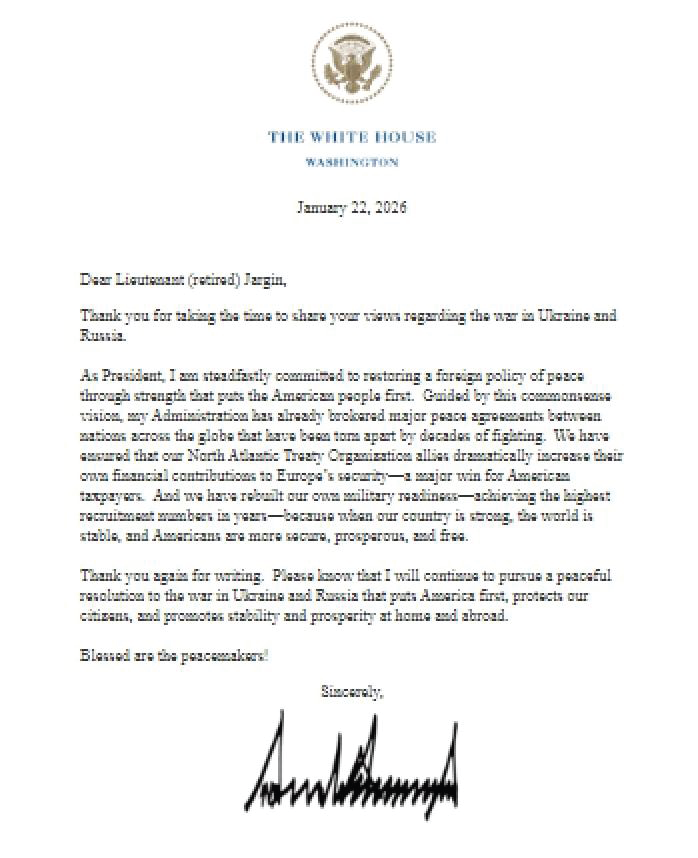 Figure 1:This article has been shared with President Trump. Most important
is the last sentence: Blessed are the peacemakers!
Figure 1:This article has been shared with President Trump. Most important
is the last sentence: Blessed are the peacemakers!
Review Article
Environmental, Healthcare and Social Aspects of the War in Ukraine and Russia
Jargin SV1* and Bludau HB2
1Peoples’ Friendship University of Russia, Russian Federation
2University of Heidelberg, Germany
2University of Heidelberg, Germany
*Address for Correspondence:Jargin SV, Peoples’ Friendship University of Russia, 117198
Moscow. E-mail: sjargin@mail.ru
Submission: 22 January, 2026
Accepted: 12 February, 2026
Published: 14 February, 2025
Copyright: © 2026 Jargin SV, et al.. This is an open access
article distributed under the Creative Commons Attribution
License, which permits unrestricted use, distribution, and
reproduction in any medium, provided the original work is
properly cited.
Keywords:Ukraine war; Global management; Healthcare;
Environment
Abstract
The declared reason of the ‘Special Military Operation’, which
began in February 2022, was Ukrainian anti-separatist activity in the
Donbas since 2014. Combating separatism within national borders is
generally justifiable. All provinces of Ukraine voted for independence
in the 1991 referendum. The borders were recognized by all nations,
including Russia. Admittedly, a majority of residents in the southern and
eastern parts of Ukraine are Russian-speaking. Some people preserving
loyalty to Russia might participate in misappropriation of foreign aid,
indirectly contributing to the economic and technological progress
of the region but not to the military effort. Recent referendums in the
occupied territories were met with skepticism because residents voted
for the unification with Russia to avoid trouble as they did not believe
that the situation will be reverted. The conflict has distracted people
from internal problems, facilitating screw-tightening, postponing
solutions in the field of healthcare. All participants (both factual and
fictive) of the war in Ukraine and Russia will obtain the veteran status
thus acquiring privileges over fellow-citizens. Some of them will occupy
leading positions without adequate selection and training. The war has
thwarted ecological policies in Europe and worldwide. Ideally, peace
should be achieved by negotiations, producing a reasonable, mutually
acceptable solution. Russian rulers are often accused of aggression
these days. In fact, they may be pioneers of a new historic period. If the
world is becoming multipolar, armed conflicts of various magnitudes
may become permanent. The undermining of globalization is another
nail in the coffin of democracy and human rights. Great projects could
be accomplished by the unified humankind to improve the quality of
life worldwide.
The declared reason of the ‘Special Military Operation’ (SMO),
which began in February 2022, was Ukrainian anti-separatist
activity in the Donbas since 2014. Apparently, this activity has
been exaggerated by Russian officials and media (discussed below).
Combating separatism within national borders is justifiable,
exemplified by Russian anti-separatist operations in the Caucasus
(1994-2009). The Ukraine voted for independence (~83%) in the
1991 referendum. The pro-independence vote varied from 95% in the
west of the country to 76.5 % in the Donetsk area and 54% in Crimea
[1]. The 1991 borders of Ukraine were recognized by all nations,
including the Russian Federation (RF), which consented to guarantee
the borders by virtue of the Tripartite Accords (with participation of
the United States) of January 14, 1994, and the Budapest Declaration
of December 5, 1994. On May 31, 1997, the Treaty on Cooperation
and Partnership between Russia and Ukraine was signed, recognizing
the borders. The State Duma endorsed the Treaty in December
1998 and the Federation Council in February 1999 [2]. The United
Nations considers SMO to be a violation of territorial integrity and
sovereignty, which is against the UN Charter. The Ukraine war,
having undermined the principle of internationally agreed status
quo, has triggered a series of conflicts in different parts of the world.
The Russian military establishment earns credibility and funding by
exploiting supposed threats from the West [3]. Accusations of the
former rulers, Mikhail Gorbachev and Boris Yeltsin, of the Ukraine
crisis and Soviet Union (SU) dissolution can be heard from Russian
officials and media these days. This is rather pointless as all of them
had been elected by an absolute majority and were representatives
of the same ruling class. The policies were changed according to
momentarily prevailing interests: privatization of the state property,
absorption of foreign technology, and imperialism, one after another.
These are just facts; moral judgments are avoided here.
Admittedly, a majority of residents in the southern and
eastern parts of Ukraine are Russian-speaking; some of them were
disappointed that their region had not become a part of RF. The
Ukraine in today’s borders was created by Bolsheviks disregarding
ethnic and linguistic realities. Statistics about ethnic composition are
potentially misleading because some residents registered themselves
as Ukrainians for reasons of convenience but continued sharing the
Russian identity and loyalty. Reportedly, 25.5% of Ukrainian citizens
defined their ethnicity as both Ukrainian and Russian in 1997.
Around one-third of the population believed that the two countries
should be unified [4]. Numerous Russia-sympathizers probably
participate in the misappropriation of foreign aid, which contributes
to the economic and technological progress of the region but not to
the military effort. Inhabitants of RF and eastern parts of Ukraine are
too close to each other for a real confrontation. Both are relatively
tolerant to the loss of life; both are in need of technological advance
and ready to cooperate for the great common future. Therefore, the
Ukrainian war is a farce at least in part.
Recent referendums in the occupied territories were met with
skepticism because residents voted for the unification with RF
to avoid trouble as they did not believe that the situation will be
reverted. The Soviet-trained collectivism has influenced elections
and opinion polls. Almost everybody voted the ruling party in the
former SU. Some Russian-speaking areas may become parts of RF if
people really want it. A workable solution must be found by means of
negotiations. The question is, however, whether there are responsible
negotiating partners. The history of the 20th century demonstrated
that European leaders sometimes took short-sighted decisions.
Undoubtedly, Russians must support civilization; but there should
be some certainty that right people and right policies are supported.
There is an opportunity to settle two long-lasting disputes today.
Considering partial analogy between Donbas and Taiwan, the
following peace initiative has been proposed [5]. Referendums under
international control should be held in both regions with a proposal of
3 options: unification with Ukraine/China, independence, inclusion
into RF, or for Taiwan - a protectorate by the United States and/or
Japan. Analogous solution was proposed for the Crimea in 2015 [6].
Along the same lines, some territories of East Galicia may become
Polish in exchange for German lands in the west of the country. The
same is true for Königsberg and Curonian Spit that must belong to
Germany, as well as/or Danzig and Stettin. In parallel, rich traditions
of cooperation between Germany and Russia should be revitalized.
The authors sincerely hope that borders in Europe are going to lose
significance in future.
The conflict in Ukraine has not been objectively elucidated.
Based on available information and own observations, the authors
believe that the warfare, harm and victims have been overestimated.
The author (SJ) observed damaged buildings or roads neither in
Donetsk area in 2014 and 2022 nor in Belgorod and Shebekino in
October 2025. Residents of Shebekino say that a few buildings have
been damaged but quickly repaired; illustrations are in the book [7].
The statements like ‘Residents of the town described it as destroyed
by heavy shelling’ (Wikipedia, Shebekino, accessed December 15,
2025) are far from reality. Another example: “Our city [Shebekino] is
being hit daily. Missile alerts sound day and night. Strikes on the city,
whether with conventional or banned cluster munitions, rain down
like peas” [8]. According to the author’s observations, destructions
in the Donbas and Shebekino areas have been incomparably less
prominent than in Abkhasia, Chechnia, Beirut, Croatia (1993), and
Baghdad (2003), where fires and dilapidations were caused mainly by
local marauders rather than military actions [9].
There was a tendency to overestimate military activities and harm
also regarding other conflicts in the post-Soviet space. Exaggerated
dangers together with bribery at frontier crossings with participation
of the military personnel [10] have been unfavorable for tourism,
trade and, consequently, for the international understanding and
trust. This, in turn, contributes to conflicts. Abandoned dilapidated
buildings were often bombarded, as it was in the North Caucasus
in the 1990s, whereas residents had been warned and relocated. In
the meantime, the towns and villages have been newly rebuilt; some
Soviet-time facilities were replaced by modern constructions. The
service in overmanned militias both in the Donbas and in Caucasus
has been a remedy against unemployment due to the overpopulation
in the latter and coal mines closures in the former. The conflicts
have distracted people from internal problems, facilitating screwtightening,
postponing solutions in the field of public health. All
participants (both factual and fictive) of the current conflict will obtain
the veteran status thus acquiring privileges over fellow-citizens. Some
of them will occupy leading positions without proper selection and
training. The care of war veterans is showcased these days. They enjoy
advantages in the healthcare and everyday life. There are misgivings,
though, that the veteran status has been awarded gratuitously to some
individuals from the privileged milieu. Many World War II veterans
had been factually maltreated in 1990-2005, when the average life
expectancy decreased especially in men; by 1993 it had slumped to
58-59 years [11,12]. The healthcare deteriorated at that time. It is
known that some military veterans consume alcohol. During the antialcohol
campaign (1985-1989) they had to queue for hours at retail
outlets or to consume non-beverage alcohol. Inexpensive beerhouses
were crowded while visitors usually stood on their feet. Standing for
a long time is undue hardship for aged people especially after work.
Their counterparts in Europe are sitting in comfortable beerhouses
consuming products of better quality than those available in RF. Since
the 1990s, poor-quality toxic liquids have been sold in vodka bottles
through legal shops generally with the knowledge of authorities.
There have been mass poisonings with lethal outcomes; references are
in the book [13]. The quality of sold alcohol has improved since then;
some legally sold beverages smell technical ethanol now as before.
The conflict in Ukraine has thwarted ecological policies in Europe
and worldwide. Environmental protection and energy conservation
are less popular in RF than in other developed nations. The war
itself is damaging for the environment. The conflict between major
agricultural countries has negative impact on the global food supply.
The birth control has been obfuscated by presumed national interests:
the demographic growth was used to strengthen the sovereignty and
defenses. The military needs young people. Pro-natalist policies are
unfavorable in view of the global overpopulation. The demographic
growth contributes to shortage of food and energy in many regions.
The ecological damage, dearth of drinking water and food are
generally proportional to the population density. As food prices rise,
some nations are likely to cope by converting forests to fields. The
agricultural production increases partly through the overexploitation
and pollution of water resources, groundwater depletion,
deforestation and environmental degradation.
In the past, overpopulation was counteracted by wars, pestilence
and famine. Today, scientifically based humane methods can be used
to regulate the population size. Under conditions of globalization,
an authority based in developed countries could counteract the
overpopulation and environmental damage. Among advantages of
globalization are the ecological management, governance of the world
economy and control of warfare [14,15]. A globally coordinated
unemployment protection would inhibit migrations and help people
to develop professional skills according to new demands [16]. It
appears inevitable that the human population will become reduced
during the present century. How this happens may be to some extent
within our control. It will not remain so indefinitely.
Russian leaders and official ideologists are against globalization.
An example is Aleksandr Dugin, called the “Putin’s Brain” [17]. Here
follow several citations from his works (verbatim translations): “We
need to defeat the West as a claim to universalism, globalism and
uniqueness” [18]; “The prohibition of war propaganda is pharisaic.
You can’t get away from the war and you shouldn’t try” [19]; “Only
a traitor would wish peace today” [20]; “We must forget about the
nightmare that is called political correctness, liberalism and human
rights. We must forget this terrible nonsense” [21]; “We make the war.
It originates in our heart. We give birth to the war” [22]. Alexandr
Dugin was born into a family of a Soviet colonel-general [23].
Admittedly, more recent Dugin’s writings, textbooks in particular,
contain reasonable conclusions. Criticizing globalization, he noticed
that for a large part of national bureaucracy (read: Nomenklatura
[24]) it would imply loss of status [25]. This seems to be the main
motive of the anti-globalist ideology prevailing in the Russian
officialdom these days.
The undermining of globalization is another nail in the coffin of
democracy and human rights. Great projects could be accomplished
by the unified humankind to improve the quality of life worldwide:
irrigation systems, nuclear and other energy sources as an alternative
to fossil fuels. Nuclear power can be used for water desalination in
arid regions; it has returned to the agenda because of increasing
global energy demands and declining fossil fuel reserves. Nuclear
power plants (NPPs) cause almost no air pollution compared to coal,
oil or natural gas [26]. Hopefully, nuclear fission will be replaced in
the future by fusion, which is intrinsically safer. The fusion should
offer a source of clean power generation with a plentiful supply of
raw materials [27]. Durable peace and international cooperation
are needed for construction of NPPs in optimally suitable places,
notwithstanding national borders, considering all sociopolitical,
geographic, geologic factors, attitude of workers to their duties.
Unfortunately, such global projects are hardly possible today thanks
to the war in Ukraine and Russia.
The Chernobyl accident has been exploited to strangle the
worldwide development of nuclear energy [28], thus supporting high
prices for fossil fuels. At least, negligence and disregard for written
instructions were among the causes of the accident [29,30]. Reactor
safety systems were disabled deliberately in order to carry out an
experiment [31,32], which might have been a pretext for covering
the sabotage. The number of control rods in the reactor was only
half the minimum required for safe operation [32]. Escalation of
conflicts contributes to the boosting of fossil oil and gas prices. Cui
bono? By analogy with Chernobyl, the war damage and shutdown
of the Zaporozhie nuclear power plant (the largest in Europe) have
increased demands for fossil fuels. The weightiest argument against
nuclear facilities is that they are potential war targets. Apparently, the
maintenance of high fossil fuel prices has been one of the motives to
unleash and continue the war in Ukraine. Analogously, in the wake
of Palestine conflicts, host governments gained control of the fossil
fuels by 1976. The concessionaire companies lost their concessions,
which was followed by a drastic oil price elevation. This had been
foreseeable, being probably a hidden motive of Middle-Eastern
conflicts. The Soviets have readily assisted. At the same time, the
whole region has received regular foreign aid.
The separation of Russia from Europe has started in 1917 and
continued thereafter [33]. The power holders, so-called nomenklatura
[24], allied with the military, have generally been against the coexistence
in one legal field with the West. Should the power in Europe shift
to the East, it would entail certain changes: autocratic management
style, disregard for laws and regulations, corruption and collectivism.
The quality of many services and products will decline: spoiled foods
on sale, falsified beer and wine, wrong price tags in shops, misquoting
of legal codes by civil servants in their correspondence, backdating
of official letters, different kinds of misconduct in the healthcare and
medical research. Threats, violence and harassment at working and
dwelling places have been used to intimidate certain professionals
and students to deter them from criticism [34].
The intimidation policy with exaggeration of crime-related
dangers is perceptible since the last decades. People have been
systematically intimidated by the media, TV series, extortion e.g.
by plumbers performing repairs in private apartments, harassment
at dwelling and working places. The media factually propagandize
criminal behavior, among other things, approving of violence and
lynching in prisons. In a popular TV series, the showman Leonid
Kanevsky reiterates phrases like: ‘He didn’t survive his jail term...
Prison inmates don’t like such people’. Adam, one of the sons of
Chechen leader Ramzan Kadyrov, has been promoted and decorated
after he had publicly beaten a prison inmate [35]. Adam’s sojourn
in the prison was illegal but arranged by the authorities. Thereafter,
Vladimir Putin personally met Adam. Vitaly Kaloyev was promoted
to deputy minister having committed intentional murder. A petition
was filed to the government in 2015 to dismiss Kaloyev from his
position, reproduced as illustration in the article [10]. In 2017,
Vladimir Putin signed a new law decriminalizing some forms of
domestic violence [36,37]. Many people in RF live under supposed
or real threat of assault and battery. Intimidated citizens are an easy
prey for a dictator.
In conditions of the Soviet-trained collectivism, almost everybody
has voted the ruling party. This is psychologically explicable; but
the solid vote makes the whole population formally responsible
for political decisions. Homogeneity of thinking is a predictor of
conformism that is conducive to dictatorship [38]. Dmitri Trenin
generalized about the national character: deification of authorities,
low value of human life and personality, disrespect for laws, private
property and education, hatred and envy of America [39]. Envious
people blame those who make them feel ashamed by comparison
[40]. Some functionaries are descendants of the rural proletariat who
burnt mansions in 1917 and committed all sorts of violent crimes,
envy being one of the motives. Bolsheviks fostered envy, which easily
turned into hate [41]. The psychological projection in paranoids is
regarded to be an aberration of shame. Being unable to tolerate shame,
they project it onto others and thus disown. In its turn, intense shame
confers vulnerability for paranoia [42]. There have been symptoms
of paranoia, hubris syndrome and other abnormalities in certain
Soviet and post-Soviet leaders [43,44]. Shame confers vulnerability
for paranoia and amplifies the latter’s association with stress [42].
Repressed shame may cause aggression [45]. There are reasons
to be ashamed in today’s Russia, as reflected by a comparatively
low life expectancy mainly due to the suboptimal healthcare and
comparatively low life expectancy [46].
The autocratic management style discourages criticism. In the
healthcare, attributes of this style include a paternalistic approach
to patients, bossy management, and harassment of colleagues if
they do not follow instructions. Under conditions of paternalism,
misinformation of patients, disregard for the principle of informed
consent, and compulsory treatments are seen as permissible.
Apparently, training of medical personnel under the imperative of
readiness for war has been one of the motives to overuse invasive
procedures sometimes without sufficient clinical indications [46,47].
Finally, the obstacles to the import of drugs and medical equipment
should be mentioned. Domestic products are promoted sometimes
despite questionable quality and possible counterfeiting.
Considering the above, continuation of the conflict in the Ukraine is
waste of money contributing to technological advancement of the East
European region. Ideally, peace should be achieved by negotiations,
producing a reasonable, mutually acceptable solution. This seems to
be impossible in the face of the current Russian leadership. Another
way to durable solution would be the occupation and protectorate
over the part of Ukraine planned to be incorporated into Europe.
Certain non-Russian actors may be interested in a continuation of
the fratricidal war, and there are misgivings that Vladimir Putin has
come under their influence. Vladimir Putin and Xi Jinping continue
the cause of Stalin and Mao. Both acknowledge that borrowing (read
purloining) know-how is a vehicle of their progress. In regard to
China, this process was named ‘anti-Western westernization’ [48].
Among others, this pertains to the healthcare and medical research
[34,46]. Reportedly, over 80% of clinical trial data submitted to
support new drug registrations in China have been fraudulent [49].
There are no corresponding figures for Russia; but it is known that
scientific misconduct is widespread in this country [34]. There may
be an improvement tendency thanks to free Internet resources like
the PubMed. It will take some time before disadvantages of unburied
Maoism [50] and totalitarianism will become evident once again. The
war in Europe agrees with China’s interests, as it was through the 20th
century. It seems that Putin is ready to cooperate and share power
with people of non-Russian ethnicity and citizenship, just to preserve
the privileges of the Nomenklatura [24]; while the Ukraine war is
used for distraction. Crises are often used by oligarchy to distract
people from internal problems, from shortages of the healthcare in
the first place [46]. Wars within Europe implicate bravery of soldiers
and irresponsibility of some leaders. Winners of such wars are those
who stay outside. The westward animosity is framed as a defense to
the ‘centuries of Western hostilities towards Russia’ [51]. The Tatar-
Mongol Yoke (1237-1480), the most efficient ‘hostility towards
Russia’, has not been mentioned, although it is a real perspective in
view of demographic and economic developments.
Conclusion
Russian rulers are often accused of aggression these days. In fact,
they may be pioneers of a new historic period. If the world is indeed
becoming multipolar, armed conflicts of various magnitudes may
become permanent. In a sense, it would be a return to the 20th century
or earlier times. A constructive alternative is the global leadership,
concentrated in the most developed parts of the world, based on
humanism and modern science. The role of Russia would be that of
a regional superpower. Great projects could be accomplished by the
unified humankind instead of the warfare and military expenditures.
Civil liberties and human rights will be gradually abandoned worldwide if our future is a series of conflicts. This perspective seems to be inevitable unless new moral principles are accepted: no population group, neither ethnic nor confessional minorities, may obtain any advantages because of numerical expansion. In view of the global overpopulation, those who have had many children should logically live in more constrained conditions. Social consequences of the gender imbalance must be borne by those population groups, where sex-selective abortions have been practiced. Acceptance of these principles could build a basis for international understanding and trust. Without procreative competition, different peoples would be more likely to live in peace. Great projects could be realized by the globalized mankind, being a reasonable alternative to excessive military expenditures. Not only durable peace but also mutual trust is needed for that. Unfortunately, trust can be abused. Ukraine should become a testing ground for the international trust and cooperation.
The world is still living off the moral capital invested by Christendom. If it will be used up, we shall descend into immorality and ethical confusion [52]. Humanism owed great deal to Christian ethics. Outside religion, it is hard to see how the notion what is right and wrong should provide a motive for doing right [53]. According to a widespread opinion, morals have no materialistic foundations worth respecting [54]. Should the power in Europe shift to the East, it would come along with losses of some moral values. The nuclear threats and declarations of jihad [55,56] have appeared against the background of Soviet atheism, while religious vocabulary is misused for political purposes. It can be reasonably assumed that some church officials supporting the war in Ukraine are atheists acting in accordance with political directives. Certain non-Russian subjects may be interested in a continuation of the current war, and there are misgivings that Vladimir Putin has come under their influence. A preferred alternative would be a leadership centered in the most developed parts of the world, based on the principles of mercy, modesty and forgiveness, aimed at preservation of human life and health.
Civil liberties and human rights will be gradually abandoned worldwide if our future is a series of conflicts. This perspective seems to be inevitable unless new moral principles are accepted: no population group, neither ethnic nor confessional minorities, may obtain any advantages because of numerical expansion. In view of the global overpopulation, those who have had many children should logically live in more constrained conditions. Social consequences of the gender imbalance must be borne by those population groups, where sex-selective abortions have been practiced. Acceptance of these principles could build a basis for international understanding and trust. Without procreative competition, different peoples would be more likely to live in peace. Great projects could be realized by the globalized mankind, being a reasonable alternative to excessive military expenditures. Not only durable peace but also mutual trust is needed for that. Unfortunately, trust can be abused. Ukraine should become a testing ground for the international trust and cooperation.
The world is still living off the moral capital invested by Christendom. If it will be used up, we shall descend into immorality and ethical confusion [52]. Humanism owed great deal to Christian ethics. Outside religion, it is hard to see how the notion what is right and wrong should provide a motive for doing right [53]. According to a widespread opinion, morals have no materialistic foundations worth respecting [54]. Should the power in Europe shift to the East, it would come along with losses of some moral values. The nuclear threats and declarations of jihad [55,56] have appeared against the background of Soviet atheism, while religious vocabulary is misused for political purposes. It can be reasonably assumed that some church officials supporting the war in Ukraine are atheists acting in accordance with political directives. Certain non-Russian subjects may be interested in a continuation of the current war, and there are misgivings that Vladimir Putin has come under their influence. A preferred alternative would be a leadership centered in the most developed parts of the world, based on the principles of mercy, modesty and forgiveness, aimed at preservation of human life and health.
Conflict of interest statement:
The authors declare no conflict of interest.
References
14.
Giddens A (2002) Runaway world: How globalization is reshaping our lives. London: Profile Books.
17.
Rutland P (2016) Geopolitics and the roots of Putin’s foreign policy. Russian History 43: 425-436.
34.
Jargin SV (2020) Misconduct in Medical Research and Practice. New York: Nova Science Publishers.
35.
Trevelyan M (2023) Chechen leader Kadyrov says he's proud of son for beating up prisoner. Reuters.
Citation
Jargin SV, Bludau HB. Environmental, Healthcare and Social Aspects of the War in Ukraine and Russia. J Environ Stud. 2026;12(1): 5.