

Journal of Clinical and Investigative Dermatology
Download PDF
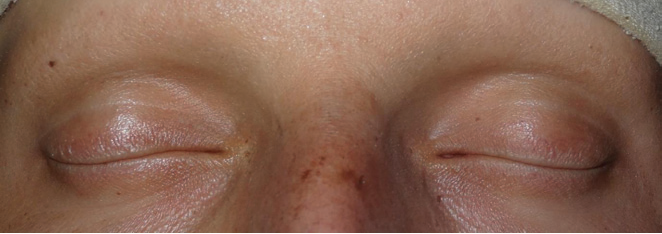 Figure 1:Case 1: Madarosis, with complete absence of the eyebrows and
eyelashes.
Figure 1:Case 1: Madarosis, with complete absence of the eyebrows and
eyelashes.
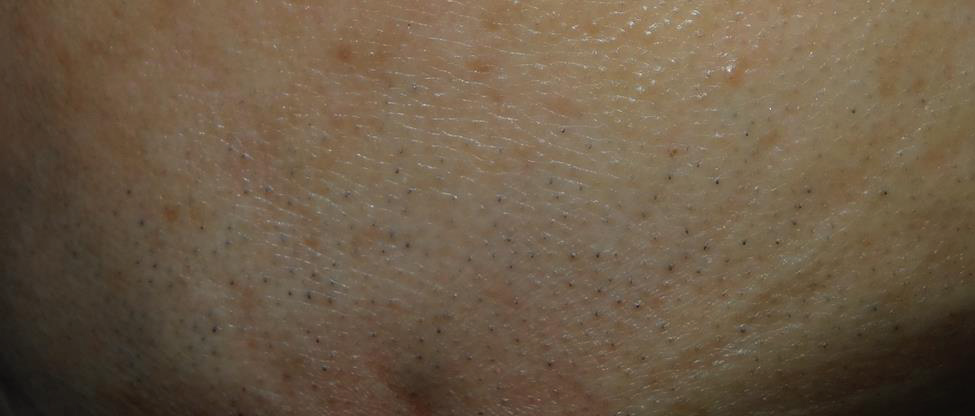 Figure 2:Case 1: Small black hairs were observed within scalp hair follicles
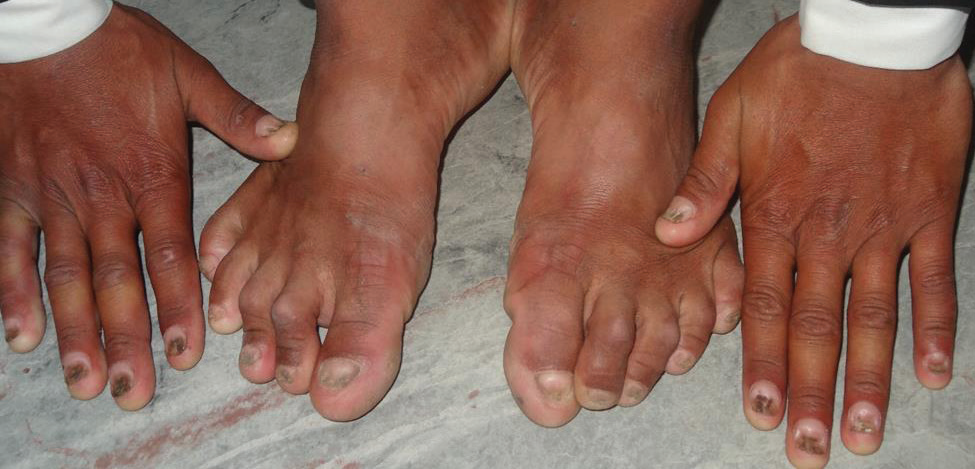 Figure 3:Case 1: Onychodystrophy affecting all 20 nails, with distal
downward sloping. Note the crumpled, hyperpigmented, and atrophic distal
portions; the fingernails are more severely affected than the toenails.
Figure 3:Case 1: Onychodystrophy affecting all 20 nails, with distal
downward sloping. Note the crumpled, hyperpigmented, and atrophic distal
portions; the fingernails are more severely affected than the toenails.
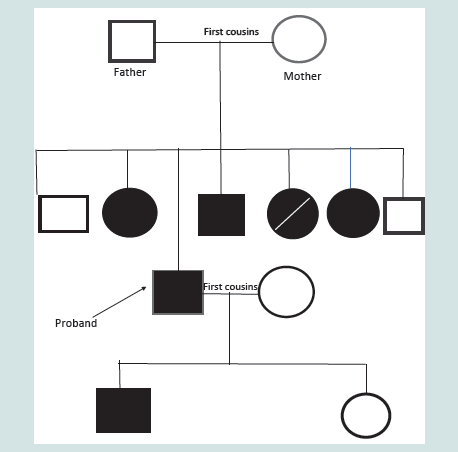 Figure 4:Pedigree of the family.
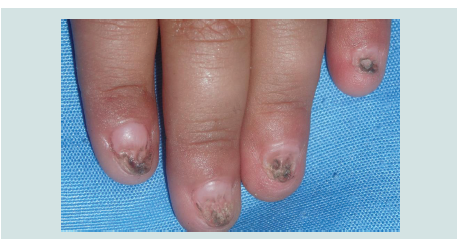 Figure 5:Case 2: Close-up view of the distally crumpled, dystrophic,
hyperpigmented fingernails of the left hand.
Figure 5:Case 2: Close-up view of the distally crumpled, dystrophic,
hyperpigmented fingernails of the left hand.
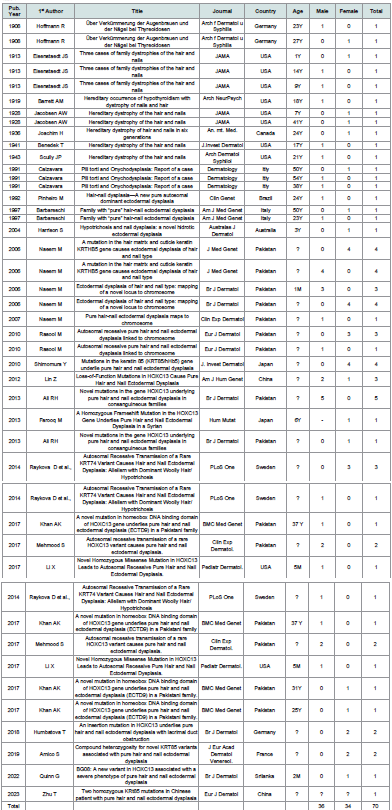 Table 1:
Case Report
Familial Pure Hair–Nail Ectodermal Dysplasia in Yemen: A Father–Son Case Report with Clinical Correlation
Alshami MA1*, Alshami AM2, Alshami HM1 and Lutf RM1
1Department of Dermatology, Faculty of Medicine and Medical Sciences,
Sana’a University, Yemen
2Department of Conservative Dentistry, Faculty of Dentistry, Sana’a University, Yemen
2Department of Conservative Dentistry, Faculty of Dentistry, Sana’a University, Yemen
*Address for Correspondence:Mohammad Ali Alshami, Department of Dermatology, Faculty of
Medicine and Medical Sciences, Sana’a University, Sana’a 1064, Yemen. E-mail Id: Mohammadalshami62@gmail.com
Submission: 13 April, 2026
Accepted: 15 May, 2026
Published: 19 May, 2026
Copyright: © 2026 Alshami MA, et al. This is an open access
article distributed under the Creative Commons Attribution License,
which permits unrestricted use, distribution, and reproduction in any
medium, provided the original work is properly cited.
Keywords:Skin; Hair; Nail; Ectodermal Dysplasia
Abstract
Background: Pure hair–nail ectodermal dysplasia (PHNED) is a
rare subtype of ectodermal dysplasia characterized by congenital
hair and nail involvement, with teeth, sweating, and other
ectodermal structures remaining unaffected when the disorder is fully
phenotypically assessed. Only a limited number of PHNED cases have
been reported, and the present father–son presentation adds to this
rare clinical literature. PHNED has been associated with pathogenic
variants in KRT74, KRT85, and HOXC13. Reported patients with HOXC13-
associated PHNED often show severe hypotrichosis or complete
alopecia with nail dystrophy; in the present family, the phenotype
included congenital alopecia of the scalp, eyebrows, and eyelashes
and dystrophy of all 20 nails.
Case presentation: A 27-year-old Yemeni man and his 7-monthold son presented with congenital total alopecia involving the scalp, eyebrows, and eyelashes, along with dystrophy of all 20 nails. Genetic testing identified an HOXC13 variant in the father; the son was clinically affected but was not genetically tested.
Conclusion: This father–son presentation is clinically consistent with PHNED and, in the genetically tested father, supports the association between HOXC13 variants and PHNED; it adds to the limited literature on HOXC13-associated hair–nail ectodermal dysplasia.
Case presentation: A 27-year-old Yemeni man and his 7-monthold son presented with congenital total alopecia involving the scalp, eyebrows, and eyelashes, along with dystrophy of all 20 nails. Genetic testing identified an HOXC13 variant in the father; the son was clinically affected but was not genetically tested.
Conclusion: This father–son presentation is clinically consistent with PHNED and, in the genetically tested father, supports the association between HOXC13 variants and PHNED; it adds to the limited literature on HOXC13-associated hair–nail ectodermal dysplasia.
Abbreviations
ED: Ectodermal dysplasia; HOXC13: homeobox C13 gene;
HOXC13: homeobox C13 protein; KRTHB5: Keratin, hair, basic,
5 (hair matrix and cuticle keratin gene); KRT74: keratin 74 gene;
KRT74: keratin 74 protein; KRT85: keratin 85 gene; KRT85: keratin
85 protein; PHNED: Pure hair-nail ectodermal dysplasia
Introduction
Pure hair–nail ectodermal dysplasia (PHNED) is an extremely
rare subtype of ectodermal dysplasia (ED) limited to the hair and nails,
while other ectodermal structures, such as the teeth and sweat glands,
remain unaffected. The first case of ED was described by Thurnam
in 1848, and the term “ectodermal dysplasia” was later coined by
Weech in 1929 [1,2]. PHNED was first described by Hofmann in
1908 and subsequently defined by Pinheiro in 1992; since then, only
approximately 70 cases of PHNED have been reported worldwide.
Compared with some reported KRT74- or KRT85-associated phenotypes, HOXC13-associated PHNED has frequently been described with severe hypotrichosis or complete alopecia. Nail dystrophy in PHNED may involve all digits and can present with irregular, fragile, or dystrophic nails; in the present father, all 20 nails were affected and showed distal dystrophy with marked downward curvature.
Compared with some reported KRT74- or KRT85-associated phenotypes, HOXC13-associated PHNED has frequently been described with severe hypotrichosis or complete alopecia. Nail dystrophy in PHNED may involve all digits and can present with irregular, fragile, or dystrophic nails; in the present father, all 20 nails were affected and showed distal dystrophy with marked downward curvature.
Case Presentation
A 27-year-old Yemeni man presented with congenital total
alopecia affecting the scalp, eyebrows, and eyelashes, accompanied
by dystrophy of all 20 nails [Figure 1]. On close examination, sparse
short black hairs were visible within some scalp follicles despite
clinically apparent total scalp alopecia [Figure 2]. All 20 nails were
distally dystrophic, with marked downward curvature [Figure 3].
The patient had normal dentition and reported normal sweating.
Scalp biopsy from the father showed marked follicular hypoplasia,
with a substantially reduced number of structurally disorganized
hair follicles. The patient was otherwise healthy, with no associated
systemic abnormalities. The presence of similarly affected siblings
with reportedly unaffected parents raises the possibility of autosomal
recessive inheritance in the father’s sibship. Although the affected
father and son suggest vertical transmission, the unaffected parents
and affected siblings of the father also raise the possibility of
autosomal recessive inheritance; definitive assessment of inheritance
would require segregation analysis, including testing of the son and
relevant relatives. [Figure 4].
Case 2:
The patient’s 7-month-old son showed congenital alopecia of the
scalp, eyebrows, and eyelashes and dystrophy of all 20 nails, closely
resembling the father’s phenotype; genetic testing was not performed
[Figure 5].
Discussion
EDs are a rare group of genodermatoses that affect tissues derived
from the ectoderm, including the hair, nails, teeth, and sweat glands.
The first classification system for EDs was proposed by Freire-Maia
and Pinheiro in 1982 and was subsequently updated in 1994 and
2001, when PHNED was included [3,4]. PHNED is a rare subtype of
ED with genetic heterogeneity and reported autosomal recessive and
autosomal dominant inheritance patterns [5,6]. A summary of the
clinical and genetic features of previously reported cases is provided in
[Table 1]. Congenital absence or marked reduction of scalp, eyebrow,
and eyelash hair can overlap clinically with other genodermatoses,
including atrichia with papular lesions; however, the combination
of congenital alopecia with generalized nail dystrophy favors
PHNED in the present family. Hypohidrotic ectodermal dysplasia
may present with hypotrichosis, but it is usually distinguished by
abnormal sweating and dental anomalies, features not documented
in the father in the present report. Alopecia totalis or universalis may
rarely occur early in life and can be associated with nail changes, but
the congenital onset, familial pattern, and generalized dystrophy
of all nails in this family are more consistent with PHNED. In the
present father, all fingernails and toenails were distally dystrophic
with marked downward curvature.. Congenital hyponychia or
micronychia may also be considered, but these conditions primarily
involve nail hypoplasia and do not usually account for the combined
congenital alopecia and generalized onychodystrophy seen in this
family. Our literature review identified a limited number of reported
PHNED cases, including two Yemeni siblings previously reported by
the first author (Table 1). Pathogenic variants in KRT85, HOXC13,
and KRT74 have been reported in patients with PHNED or closely
related hair–nail phenotypes [7,8]. KRT85 and KRT74 encode type
II keratins, whereas HOXC13 encodes a transcription factor involved
in regulating keratin and keratin-associated protein genes. Keratins
are major intermediate filaments within hair and nail keratinocytes,
where they maintain structural integrity and confer mechanical
resilience. They are classified into two types: type I keratins, encoded
by genes on chromosome 17, and type II keratins, encoded by genes
on chromosome 12.
The clinical features observed in the present father and son
resemble those in the previously reported Yemeni siblings and in
the phenotype described by Naeem et al., who reported a pathogenic
variant in the hair keratin gene now referred to as KRT85 [8,9]. The
histopathologic findings of the scalp biopsy were similar to those
reported by Lin et al. [7]. Genetic testing of the son was not performed
because of financial constraints.
Conclusion
The father and son showed clinical features consistent
with previously reported PHNED cases, and the father’s scalp
histopathology was comparable to findings described in earlier
HOXC13-associated PHNED reports. To the best of our knowledge,
the father represents the first genetically confirmed case of PHNED
reported from Yemen, while the son represents a clinically affected
familial case without molecular confirmation.
Patient consent:
Permission was obtained from the patients to publish their data in the study.
References
Citation
Alshami MA, Alshami AM, Alshami HM, Lutf RM. Familial Pure Hair–Nail Ectodermal Dysplasia in Yemen: A Father–Son Case Report with Clinical Correlation. J Clin Investigat Dermatol. 2026;14(1): 1