

Journal of Addiction & Prevention
Download PDF
Project participants completed six in-person (see (Table 1) COVID 19 note) project visits: intake, and 3, 6, 12, 18, and 24-month follow-up assessments. Baseline assessments occurred when participants were admitted into treatment at Horizons, and follow-up assessments were conducted throughout their residential treatment and following treatment discharge. At three time points, between the in-person visits (at 9, 15 and 21 months), a member of the project team communicated by phone or text message with the participant to complete a brief survey, update contact information, and provide reminders of future visits. For each in-person project visit participants received a gift card for a big box retailer for the following amounts: $30 for intake, 3 and 6 months, $40 for 12 and 18 months, and $50 for 24 months. At the intake visit participants also selected a welcome gift ($10 in value), and for each completed check-in telephone call (at 9, 15, and 21 months) the participant selected a small gift from a gift basket at the next in-person visit ($5 in value). Each participating child also selected an age-appropriate gift at each in-person visit ($5 in value, assortment of small toys and books).
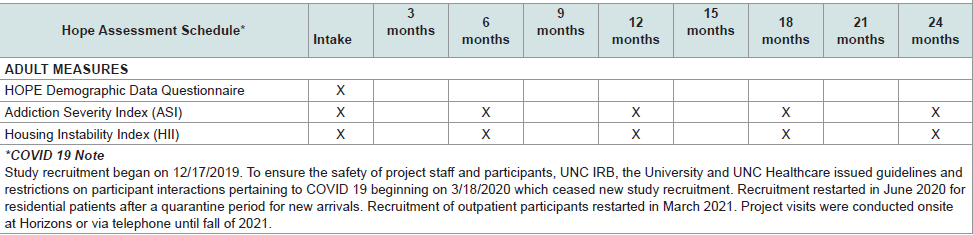 Table 1:The timing of the measurements.
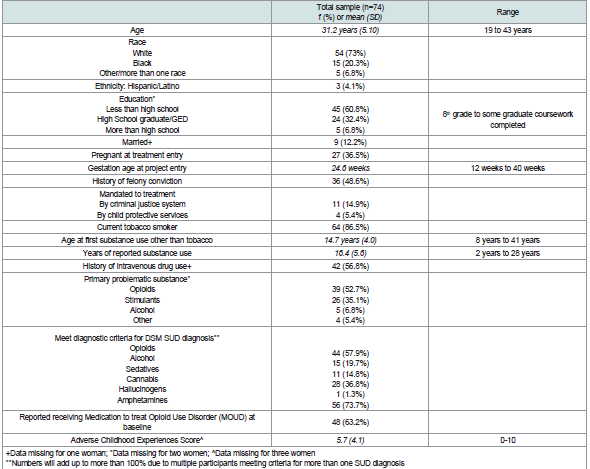 Table 2:Demographic and Psychosocial Characteristics of Residential Women Enrolled in HOPE.
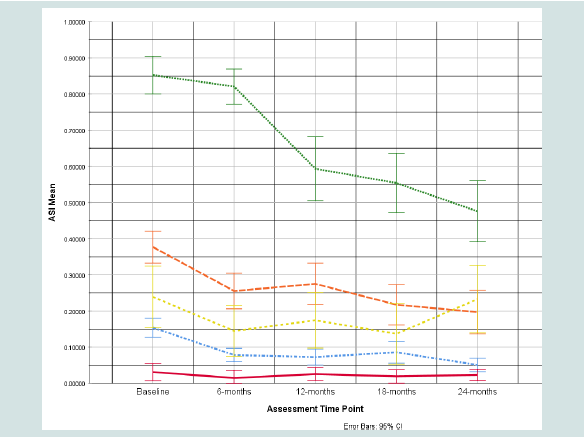 Figure 1:Clinical presentation. Erythematous serpiginous larva tracks associated with hyper-pigmented macules and crusts. (A) Posterior surface of right calf. (B) Right anterior thigh.
Research Article
Horizons’ Outcomes Performance Evaluation: Residential Substance Use Disorder Treatment Outcomes for Pregnant and Parenting Women
Kittaneh AA*a, Andringa Ka, Carter Ga, Pranakoff Sa, Evans Da, Horton Ea, Johnson Ea, McGlothlin Sa and Jones HEa,b
AHorizons Division and Department of Obstetrics and Gynecology,
University of North Carolina at Chapel Hill, Chapel Hill, NC
27510
BDepartments of Psychiatry and Behavioral Sciences and Obstetrics and Gynecology, School of Medicine, Johns Hopkins University, Baltimore, MD 21224
BDepartments of Psychiatry and Behavioral Sciences and Obstetrics and Gynecology, School of Medicine, Johns Hopkins University, Baltimore, MD 21224
*Address for Correspondence:Ahmad Kittaneh UNC Horizons, 410 North Greensboro St., Carrboro, NC 27510. E-mail Id: akittane@ad.unc.edu
Submission: 03 June, 2026
Accepted: 19 June, 2026
Published: 23 June, 2026
Copyright: © 2026 Kittaneh AA, et al. This is an open access article
distributed under the Creative Commons Attribution License, which
permits unrestricted use, distribution, and reproduction in any medium,
provided the original work is properly cited.
Keywords: Outcomes; Substance Use Disorder; Treatment; Maternal
and Child Health; ASAM 3.5
Abstract
Objectives: Pregnant and parenting patients with substance
use disorders (SUDs) face increasing clinical complexity, while
access to long-term residential treatment has declined. This study
examined whether American Society of Addiction Medicine (ASAM)
3.5 residential treatment [1] combined with wraparound services
was associated with improved outcomes during treatment and up
to 24 months following enrollment, and whether treatment duration
influenced these outcomes.
Methods: Participants were pregnant and/or parenting women receiving residential SUD treatment at University of North Carolina (UNC) Horizons between December 2019 and February 2022. Assessments were conducted at intake and at 3, 6, 12, 18, and 24 months postenrollment. Measures included the Addiction Severity Index (ASI) and the Housing Instability Index (HII). Linear mixed models evaluated changes over time and compared outcomes for participants who completed ≥180 days versus <180 days of residential treatment across housing stability and six ASI domains.
Results: N=74 women in residential care were included in this analysis. Most (96.1%) completed the study with minimal missing visits. Significant main effects of time were observed for ASI drug, employment, medical, and psychiatric composite scores, and for housing instability. Post-hoc analyses demonstrated sustained improvements from baseline through multiple follow-up points. Participants who remained in residential treatment for at least six months reported significantly lower substance use across the entire 24-month follow-up period compared to those with shorter stays. Conclusions: Comprehensive residential treatment with sufficient duration yields durable improvements across life domains for pregnant and parenting women with SUDs. Findings highlight the importance of longer residential stays and have critical implications for treatment and insurance coverage decisions.
Methods: Participants were pregnant and/or parenting women receiving residential SUD treatment at University of North Carolina (UNC) Horizons between December 2019 and February 2022. Assessments were conducted at intake and at 3, 6, 12, 18, and 24 months postenrollment. Measures included the Addiction Severity Index (ASI) and the Housing Instability Index (HII). Linear mixed models evaluated changes over time and compared outcomes for participants who completed ≥180 days versus <180 days of residential treatment across housing stability and six ASI domains.
Results: N=74 women in residential care were included in this analysis. Most (96.1%) completed the study with minimal missing visits. Significant main effects of time were observed for ASI drug, employment, medical, and psychiatric composite scores, and for housing instability. Post-hoc analyses demonstrated sustained improvements from baseline through multiple follow-up points. Participants who remained in residential treatment for at least six months reported significantly lower substance use across the entire 24-month follow-up period compared to those with shorter stays. Conclusions: Comprehensive residential treatment with sufficient duration yields durable improvements across life domains for pregnant and parenting women with SUDs. Findings highlight the importance of longer residential stays and have critical implications for treatment and insurance coverage decisions.
Introduction
Data from the 2024 National Survey on Drug Use and Health
indicate that 48.2% of women ages 12 or older report illicit drug
use in their lifetimes, and 13.7% of women ages 12 and older had
a substance use disorder (SUD) diagnosis within the past year [2].
However, the same data set reports that only 12.5% of women who
had a SUD in the past year received any treatment [2]. Barriers to
SUD treatment, including some women-specific barriers, include lack
of coordinated treatment planning among medical, addiction, and
mental health treatment providers; providers being unaware of cooccurring
psychiatric disorders; custody concerns; child care; lack of
health insurance or funds to pay for treatment; lack of transportation;
and the stigma, discrimination and prejudice women experience
around admitting to having a SUD and seeking treatment for their
SUD [3]. Women who enroll in SUD treatment are more likely than
men to appear with complex presentations, including poly-substance
use, medical and psychiatric comorbidities, and parenting/childcare
needs [4-7].
Pregnancy is a unique time in life when improving health-related
behaviors can become more urgent. For women with SUD, there
can be great motivation to reduce or stop substance use to improve
the chances of health outcomes for themselves and their infants [8].
However, when women seek SUD treatment help while pregnant,
they face a myriad of barriers to access and engagement in care
[9]. Examples of such barriers beyond those noted above for nonpregnant
women include the interaction of pregnancy, substance use
disorders, and psychiatric co-occurring disorders that are ignored
or unrecognized by treatment providers and specific stigma that
pregnant women with SUDs encounter. Clinical issues of concern for
this population include adequate prenatal care, use of SUD treatment
medications or other psychiatric medications while pregnant and/
or nursing, maternal bonding, and coordinated treatment planning
among medical and behavioral health disciplines [3].
Women with SUDs, including women who are pregnant and/
or parenting, have unique needs that are best served in women centered
programs. In fact, women-centered programs to treat
women with substance use disorders were developed following the
widespread recognition of the unique problems and issues associated
with women’s health that occurred in the 1970-80s [10]. A plethora
of treatment components that are related to treatment success have
been identified [11,12], and there is agreement that treatment should
address survival needs, general and obstetrical health, psychological
functioning, family and parenting responsibilities, trauma history, cooccurring
disorders, financial independence, appropriate treatment
medications, and support services for mother and child [10]. A
review of women-centered treatment programs found that they are
more likely than mixed-gender programs to offer childcare, housing
assistance, transportation, job training, prenatal and postpartum care,
and other skills training [13].
While the critical components of women’s treatment are generally
agreed upon, they have not been well studied in terms of greater
utilization yielding improved maternal and child outcomes, or of
the resiliency of a variety of health and well-being improvements
over time post-treatment. The HOPE project was a prospective
cohort design that enrolled women seeking treatment for substance
use disorders at UNC Horizons, an established OB/GYN clinic and
residential treatment program for women and their children in the
southeastern US [14]. The project followed participants for 24 months
from enrollment and included adult and child measures to examine
the relationship between utilization of treatment services and adult
and child outcomes over an extended period of time post-treatment.
The overall aim was to provide treatment providers and policy makers
and implementers with information to use to improve services and/
or better tailor programming for patients. A secondary aim was to
examine the extent to which the services provided yielded outcomes
that support the need for sustained and/or increased funding for
services to treat these vulnerable families. This report focuses on
the adult outcomes for the women who were residential patients at
Horizons and participated in the HOPE project.
The Horizons’ Outcomes Performance Evaluation (HOPE)
project builds on prior work [14,15] by following both women
and their children for up to 24 months from residential treatment
admission and includes an array of outcome measures. This project
also aims to fill the gap in contemporary longitudinal outcome data
for pregnant/parenting women with substance use disorders [16,17].
Thus, this project looks at length of stay in the residential program as
one measure of utilization of services and the association of service
utilization to long-term outcomes in the domains of alcohol and
substance use, housing stability, employment, medical, and mental
health.
Methods
Project Sites:
Recruitment for the HOPE project took place at the UNC
Horizons treatment sites. Intake visits and subsequent in-person
project visits took place at mutually agreed upon safe locations
that offered adequate privacy and space, primarily offices at one of
the Horizons sites, Horizons’ residential apartments, or participant
homes for women no longer living in one of the Horizons’ residential
programs.
Participants:
Patients receiving SUD treatment services at UNC Horizons
during the recruitment period who met the inclusion criteria were
eligible to participate. Patients needed to be at least 18 years of age
(also the minimum age for receiving services at Horizons), able to
communicate effectively in English, have begun services at Horizons
no more than 90 days prior to intake into the project (for this
current episode of care for women who were returning patients to
Horizons), and to have a diagnosed substance use disorder based on
DSM-5 criteria at the intake visit. Exclusion criteria were having an
acute severe psychiatric condition in need of immediate treatment or
a determination of being of imminent risk to themselves or others
during intake; any pending legal circumstances prohibiting them
from participating (e.g. they were scheduled to start a jail/prison
sentence during the project period); or confirmed plans to move out
of North Carolina during the project period.
Procedures:
Following IRB exemption, study recruitment began in December
2019 and ended in February 2022. The project team obtained informed
consent from the interested woman and for any of her children who
she wanted included in the project. The project team recruited eligible
patients within the first 4 weeks after their initial service at Horizons
(for this episode of care for women who have received services from
Horizons in the past) but not later than 90 days from initial service
at Horizons. All recruited women were informed that their decision
to participate or not participate would in no way affect their or their
children’s services at Horizons.Project participants completed six in-person (see (Table 1) COVID 19 note) project visits: intake, and 3, 6, 12, 18, and 24-month follow-up assessments. Baseline assessments occurred when participants were admitted into treatment at Horizons, and follow-up assessments were conducted throughout their residential treatment and following treatment discharge. At three time points, between the in-person visits (at 9, 15 and 21 months), a member of the project team communicated by phone or text message with the participant to complete a brief survey, update contact information, and provide reminders of future visits. For each in-person project visit participants received a gift card for a big box retailer for the following amounts: $30 for intake, 3 and 6 months, $40 for 12 and 18 months, and $50 for 24 months. At the intake visit participants also selected a welcome gift ($10 in value), and for each completed check-in telephone call (at 9, 15, and 21 months) the participant selected a small gift from a gift basket at the next in-person visit ($5 in value). Each participating child also selected an age-appropriate gift at each in-person visit ($5 in value, assortment of small toys and books).
Measures
The measures that were included in this study were (see (Table 1)
for timing):
1. HOPE Demographic Data Questionnaire: Included items on age, race, ethnicity, past treatment for SUD, years of education, marital status, pregnancy status, faith tradition, living children (ages, custody), medication for opioid use disorder (MOUD) history, tobacco use history, felony history (intake only).
2. DSM-V Substance Use Disorder Criteria: Assessed diagnostic substance use disorder criteria across multiple substances at intake [18].
3. Adverse Childhood Experiences: assessed traumatic childhood events, such as abuse, neglect, and family dysfunction that often results future psychological distress and externalizing behavior [19].
4. Addiction Severity Index (ASI): composite scores, asking about last 30 days in the following domains: drug, alcohol,
1. HOPE Demographic Data Questionnaire: Included items on age, race, ethnicity, past treatment for SUD, years of education, marital status, pregnancy status, faith tradition, living children (ages, custody), medication for opioid use disorder (MOUD) history, tobacco use history, felony history (intake only).
2. DSM-V Substance Use Disorder Criteria: Assessed diagnostic substance use disorder criteria across multiple substances at intake [18].
3. Adverse Childhood Experiences: assessed traumatic childhood events, such as abuse, neglect, and family dysfunction that often results future psychological distress and externalizing behavior [19].
4. Addiction Severity Index (ASI): composite scores, asking about last 30 days in the following domains: drug, alcohol,
employment/support, psychiatric, and medical. Intake, 6, 12, 18
and 24 months [20]. Family and social domains were not included
as this was outside the scope of the clinical programming impact
on sustained health gains and housing security assessed in the
study. The legal domain of the ASI was not included due to too
little variation in legal item responses.
5. Housing Instability Index (HII): 10 items, most yes/no
answers except for number of moves in last 30 days and how likely
is it that you will be able to pay for housing this month with 4
answer choices. Intake, 6, 12, 18 and 24 months [21].
Data Analyses:
Descriptive characteristics of the sample were collected and
examined at baseline. Longitudinal analyses were performed with
linear mixed models to examine differences in treatment outcomes
between those who completed more than 180 days of residential
treatment and those who completed less than 180 days of treatment.
We compared these two groups and examined the impact of this
binary split on outcomes across multiple areas, including housing
(as assessed by the HII) and 6 domains of the ASI (drug, alcohol,
employment/support, psychiatric, legal, and medical), over a 2-year
period. Total scores were calculated for the HII and for the individual
composite scores of each domain for the ASI. Reported baseline total
scores were compared to each following time point (3-, 6-, 9-, 12-,
15-, 18-, 21-, and 24-month time points). Age, race, highest level of
education completed, pregnancy status, and history of intravenous
drug use were included as covariates in all models. Models included
an interaction term of time and days in treatment. Data were analyzed
using IBM SPSS Statistics for Windows, Version 26.0 (IBM Corp,
Armonk, NY).
Results
Participants:
A total of 304 women were screened and consented to participate
into the study. 117 participants were enrolled, of those two refused
to participate. 78 were women in the residential program and the
sample of focus for this study. Of those women 74 completed the
project (96.1%), meaning they missed no more than 2 of the project
visits. Of those who did not complete the project, three women
(two in a car accident and the other due to unknown causes), and
one woman was incarcerated, resulting in a final analytical sample
of 74. (Table 2) summarizes the demographic data for the analytical
sample. The mean age of our sample was 31.2 years old (ranging from
19 to 43 years of age), 73% were white, and 60.8% had less than a
high school education. 12.2% of the sample was married, and 36.5%
were pregnant at baseline, with an average of 24.6 weeks gestation at
program entry. On average, women in the sample reported they began
using substances at 14 years old and had been using for an average of
16 years, with opioids (52.7%) and amphetamines (35.1%) being the
primary substances used. Among residential participants, the average
number of days in the residential program was 208.6 (SD = 93.6). For
participants who stayed in the program less than 180 days, the average
was 100 days (SD = 53.9), and the average for those who stayed for
more than 180 days was 266.1 (SD = 47.3).
Addiction Severity Index (ASI) Composite Scores and Housing Security:
(Figure 1) provides means for ASI composite scores across the
24-month follow-up period. We observed significant main effects
of time for specific ASI Composite Scores, including drug use (F =
10.65, p < .001), employment (F = 22.73, p < .001), medical (F =
2.83, p = .026), and psychiatry (F = 3.79, p = .01). Post-hoc analyses
for the Drug Composite Scores indicated significant pairwise
differences between baseline scores and 6- (t = 6.72, p < .0001), 12-
(t = 5.74, p < .0001), 18- (t = 6.27, p < .0001), and 24-month followup
(t = 3.72, p = .0002). For Medical Composite Scores, we observed
similar significant pairwise comparisons between baseline and 6- (t =
3.08, p = .0023), 12- (t = 3.00, p = .0030), 18- (t = 3.01, p = .0029),
and 24-month follow-up (t = 4.47, p < .0001). Additional post-hoc
analyses for the Employment Composite Score indicated significant
pairwise differences between 6-month scores and all follow-up scores
at 12- (t = 4.76, p < .0001), 18- (t = 5.53, p < .0001), 24-month followup
(t = 5.74, p < .0001). It is important to note that for most residential
patients at Horizons, they cannot seek employment until transitioning
into step-down services, typically after 4 months of treatment. For
Psychiatric Composite Scores, we observed significant differences
between baseline and 6- (t = 2.81, p = .0054), 15- (t = 3.40, p = .0008),
and 24-months follow-up (t = 2.60, p = .0099) but not 12-month
follow-up (t = 1.50, p = .1355). We also found significant effects of
time on the Housing Instability Index (HII), with post-hoc analysis
indicating significant differences between baseline and all follow-up
assessments at 6- (t = 3.82, p = .0002), 12- (t = 4.27, p < .0001), 18- (t =
4.24, p < .0001), and 24-months (t = 3.25, p = .0013).
Additionally, we observed significant interactions between the
days in residential treatment and time in the Drug Use Composite
Score (F = 2.18, p = .028) and the Alcohol Use Composite Score (F =
2.14, p = .031), indicating that individuals who were in residential
treatment reported less drug and alcohol use over time. More
specifically, individuals who had at least 6 months of residential
treatment reported lower use of substances across the 24-month
assessment period. Pairwise comparisons indicated significant
differences between baseline and final follow-up time points (t =
2.14, p = .031).
Discussion
Women who qualify for residential SUD treatment, with an
ASAM level of care at 3.5 or higher [22], often present with cooccurring
disorders, many years of substance use, significant
trauma histories, legal system involvement, and limited educational
and employment histories. The women in this study are typical of
Horizons’ patients in many ways, including prevalent nicotine use
(87%), past felony convictions (48%), early age of first use (under
15 years), years of continuous use (16 years on average), many
adverse childhood experiences (mean of 5.6) and limited educational
attainment (60% having less than a high school diploma). These
complex circumstances require tailored, intensive treatment. UNC
Horizons offers comprehensive, integrated programming that focuses
on addiction education, return to use prevention, parenting, healthy
relationships, health and safety, trauma recovery, and job readiness.
The residential program is designed to last for an average of nine
months, during which women receive intensive group treatment,
attending Substance Abuse Comprehensive Outpatient Treatment
(SACOT) group programming five days each week for approximately
4 months and then attending Substance Abuse Intensive Outpatient
Program (SAIOP) groups 3 days per week for approximately 3
months, and also meeting with an individual therapist and a case
manager about once each week. Women often begin part or full-time
jobs towards the end of their residential stays.
This project found that comprehensive residential treatment leads
to significant improvements in mental health, reductions in drug use,
increased employment, and housing stability compared to treatment
entry. Importantly, women were able to maintain and even continue
these positive trends for over a year after leaving the residential
treatment program. Given the level of severity of their substance use
disorders, and their many co-occurring factors, the improvements that
the women were able to make and sustain in key areas of their lives
are notable. Return to use after SUD is a common phenomenon, with
estimates for return to use within one year of treatment ranging from
40-70% [23-25]. Our findings indicate that intensive, comprehensive
treatment, including case management transition services to help
patients build connections to local recovery support groups and to
providers who can continue to prescribe medications, can lead to
long-term recovery. The small but significant increase in ASI medical
composite scores observed in our data from 18 to 24 months post
treatment entry is unsurprising given clinical observations that once
SUD symptoms stabilize or subside during recovery patients are able
to focus on other significant issues in their lives, including medical
issues that may have been ignored during or masked by substance use
[26].
One of the important findings from this project is that women who remained in the residential program for at least six months had significantly lower levels of substance use over the 24-month followup period than women who stayed less than six months. This finding is consistent with neuroscience studies that show brain recovery over time, including frontal white matter pathways implicated in emotional regulation and top-down executive control [27-29]. For example, consistent months without substance use shows continuous improvement in brain fiber tract integrity which may be a neural mechanism explaining recovery [30]. This finding has important ramifications for policy makers and insurers as they weigh the cost of comprehensive residential treatment and the temptation to limit the length of residential stays. The complexity of the lives of the women who present to SUD treatment at a 3.5 ASAM level, especially when pregnant and/or with at least one minor child in their custody, requires treatment that addresses all of the major life domains in order to achieve stability. Our finding adds to the literature indicating that length of stay is an important determinant in longer-term outcomes for patients [24]. Specifically for pregnant and parenting women, three national studies (including RWC/PPW Cross-Site Study) showed that women who spent ≥6 months in residential treatment had significantly higher drug free rates (68–71%) at 6–12-month follow-up than those with shorter stays [31].
One of the important findings from this project is that women who remained in the residential program for at least six months had significantly lower levels of substance use over the 24-month followup period than women who stayed less than six months. This finding is consistent with neuroscience studies that show brain recovery over time, including frontal white matter pathways implicated in emotional regulation and top-down executive control [27-29]. For example, consistent months without substance use shows continuous improvement in brain fiber tract integrity which may be a neural mechanism explaining recovery [30]. This finding has important ramifications for policy makers and insurers as they weigh the cost of comprehensive residential treatment and the temptation to limit the length of residential stays. The complexity of the lives of the women who present to SUD treatment at a 3.5 ASAM level, especially when pregnant and/or with at least one minor child in their custody, requires treatment that addresses all of the major life domains in order to achieve stability. Our finding adds to the literature indicating that length of stay is an important determinant in longer-term outcomes for patients [24]. Specifically for pregnant and parenting women, three national studies (including RWC/PPW Cross-Site Study) showed that women who spent ≥6 months in residential treatment had significantly higher drug free rates (68–71%) at 6–12-month follow-up than those with shorter stays [31].
The possible economic impact of providing residential treatment
for women with substance use disorders is substantial. For example,
operating at approximately $3 million annual budget to serve 56
women and their children, the program is estimated to prevent
roughly $4.1 million in direct public expenditures per year. Savings
accrue across multiple domains, including neonatal intensive care
unit (NICU) admissions, extended maternal hospital stays, foster
care placements, incarceration, and domestic violence or child
abuse-related hospitalizations. Under these assumptions, the net
benefit of the program is over $1 million annually, yielding a return
of $1.36 for every dollar invested. Such estimates do not include the
numerous potential long-term benefits such as reduced recurrence of
maternal SUD, decreased emergency healthcare utilization by mother
and child, improved child developmental outcomes, or increased
workforce participation and tax contributions among women in
recovery. By accounting for both immediate and downstream societal
costs, such estimates highlight that residential treatment programs are
both clinically effective and economically advantageous, representing
a sound investment of federal and state resources in maternal and
child health.
The main limitations of this project include the absence of a control
or comparison group, and the self-reported nature of substance use
variables without biological specimen testing confirmation. However,
this is a minor limitation as a meta-analysis of over 200 studies found
overall high agreement between self-reported illicit drug use and
biological measures such as urine, with agreement levels generally
>0.79 [32]. In fact, self-report can be especially reliable in studies
when participants know urine drug testing will occur, sometimes
showing lower false discovery rates than urine drug tests depending
on recall period and setting [32]. The COVID pandemic also reduced
our overall sample size and led to a greater number of telephone
study visits and fewer in-person study visits than planned. However,
the prospective nature of the project, the use of validated measures
(including the ASI, which is a well-accepted standard including for
substance use reporting), the relatively long follow-up period, and the
separation between the research team members who conducted the
study visits and the clinical team members at Horizons who delivered
treatment services (to ensure study participants were not giving
answers to please their clinicians) all lend credibility to the findings.
This study provides important information for the treatment field and
policymakers regarding the effectiveness of comprehensive residential
SUD treatment, and the importance of a longer residential stay- at
least 6 months- to address severe and complex use disorders.
Conflict of Interest Statement
The authors report no conflict of interest.
References
Citation
Kittaneh AA, Andringa K, Carter G, Pranakoff S, Evans D, et al. Horizons’ Outcomes Performance Evaluation: Residential Substance Use Disorder Treatment Outcomes for Pregnant and Parenting Women. J Addiction Prevention. 2026;14(1): 1.