

Journal of Veterinary Science & Medicine
Download PDF
A very common type of fly is the Horsefly (approximately 8-10 mm), which typically comes out in June and July, especially around woodlands. They tend to bite the horse’s underside, legs, neck and withers and can cause painful lumps. Horse flies will also bite humans [13,14]. Black flies are another common pest and are small in size (approximately 2-5 mm). These breed in rapidly moving water and are most noticeable at dawn and dusk. These flies commonly feed around the face, particularly inside the ears, where they trigger allergic skin reactions to their saliva, and distract the horse [Figure 1]. They also feed on the horse’s neck and underside [12].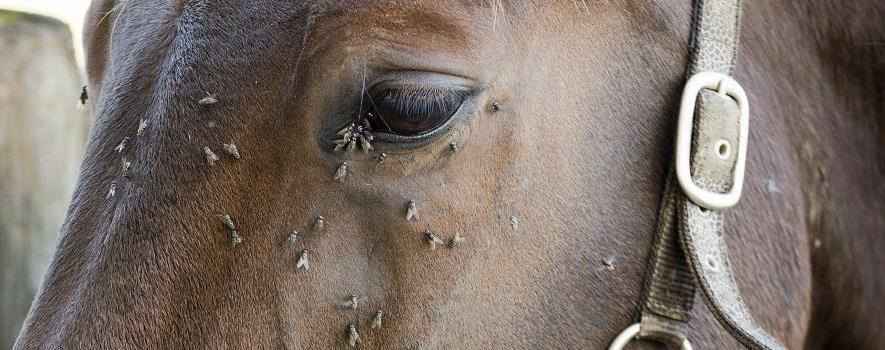 Figure 1:Flies and midges feeding on the face of a horse (Source: [13])
There are several studies reporting the tick infestations on equines in worldwide [12]. Haemaphysalis parva; Hyalomma anatolicum; Hyalomma marginatum; and Rhipicephalus (Boophilus) annulatus are known to infest equines [16]. Each species of tick has a favored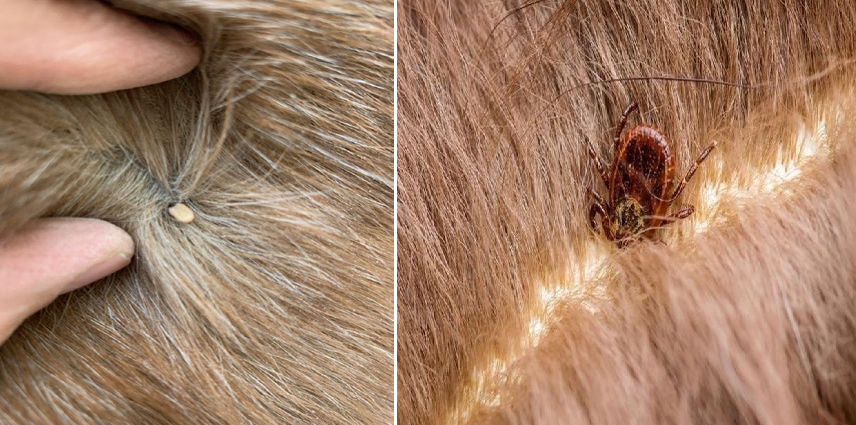 Figure 2: Tick infestations on the shoulder (a), and neck regions (b) of a
horse (Source: [22,23]).
Figure 2: Tick infestations on the shoulder (a), and neck regions (b) of a
horse (Source: [22,23]).
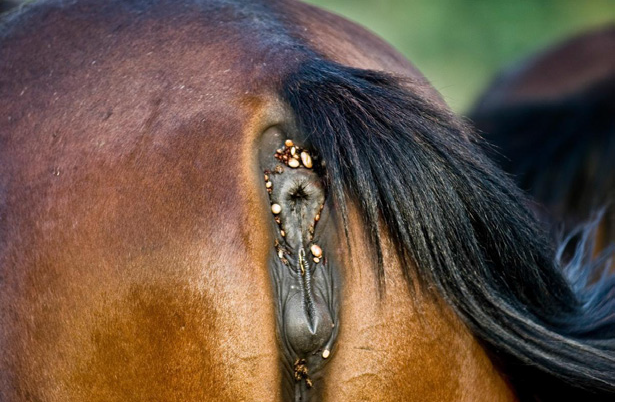 Figure 3: Heavy tick infestation on the caudal regions (in and around the
rectum and vagina) of a horse (Source: [24])
Figure 3: Heavy tick infestation on the caudal regions (in and around the
rectum and vagina) of a horse (Source: [24])
Review Article
A Review on the Major Ectoparasites of Equines
Habtamu Alemayehu, Tewodros Alemneh, and Melaku Ayelign
1Fogera District Livestock and Fisheries Resources Development
Office, South Gondar Zone, Woreta, Ethiopia
2Woreta Town Office of Agriculture and Environmental Protection, South Gondar Zone, Woreta, Ethiopia
3Gondar City Administration, City Services Provision and Administration Office, Gondar, Ethiopia
2Woreta Town Office of Agriculture and Environmental Protection, South Gondar Zone, Woreta, Ethiopia
3Gondar City Administration, City Services Provision and Administration Office, Gondar, Ethiopia
*Address for correspondence: Tewodros Alemneh, Woreta Town Office of Agriculture and Environmental Protection, South Gondar Zone, Woreta, Ethiopia. E-mail id: tedyshow@gmail.com
Submission: 10 November, 2025
Accepted:01 December, 2025
Published:05 December, 2025
Copyright: © 2025 Alemayehu H, et al. This is an open access article
distributed under the Creative Commons Attribution License, which
permits unrestricted use, distribution, and reproduction in any medium,
provided the original work is properly cited.
Keywords:Ectoparasites; Equines; Lice; Mites; Flies; Ticks; Treatment;
Control
Abstract
Equines, including horses, mules and donkeys, play a significant role in agriculture,
transportation, and recreation worldwide. Their health and well-being are paramount,
not only for their welfare but also for the economic interests of their owners and
the broader equine industry. Ectoparasites, which are organisms that live on the
exterior of their host, pose major health risks to equines by causing direct damage,
transmitting diseases, and leading to considerable economic losses. Ectoparasites,
including lice (Bovicola and Haematopinus spp.), mites (Sarcoptes and Psoroptes spp.),
flies (such as mosquitoes and stable flies), and ticks (notably Ixodes and Dermacentor
spp.) have significant impact on equine health. The importance of integrated pest
management strategies, which include chemical control, biological control, and
environmental management, is emphasized as a holistic approach to minimizing the
burden of ectoparasites in equine populations. Furthermore, the development of
resistance to conventional antiparasitic treatments necessitates the exploration of
alternative therapeutic options and preventive measures. By increasing awareness and
understanding of these ectoparasites, equine practitioners and owners can implement
effective strategies to enhance equine health and productivity. Therefore, this review
aims to provide a comprehensive overview of the most significant ectoparasites
affecting equines, detailing their life cycles, paths of transmission, clinical impacts, and
approaches to control and management.
Introduction
Horses (Equus ferus caballus), donkeys (Equus africanus
asinus), mules, zebras (Equus zebra), and other animals with similar
characteristics are classified as “equine” [1]. There are an estimated
number of 59 million horses, 43.4 million donkeys and 11 million
mules in the world [2]. According to Central Statistical Authority
[3] survey report, Ethiopia’s horse, donkey and mule population is
estimated to be 2.16 million, 8.4 million and 0.41 million, respectively.
Equines, especially in developing countries have a diversified role in the livelihood and health of human being. They are mainly used for pulling carts, public transport, for ploughing, threshing and ambulatory service for sick humans and animals [4]. Although equines are often described as hardy and resistant animals, they do suffer from a number of health problems [5]. Among which the most common entities leading to ill health, suffering and early demise and finally death are infectious diseases and parasitism, which resulted in considerably reduced animals work output, reproductive performance and most of all their longevity [5,6].
The ectoparasites such as ticks, lice, flies, and mange mites are a major problem in equines. These parasitic infestations are found at alarming and noxious level and have been considered highly responsible for substantial economic losses [7]. The characteristic symptoms are local inflammation, itchiness, loss of hair, loss of body weight, dull body coat, anemia and damage to the skin, exudation of serum and crust formation due to accumulation of serum exudate. Death takes place in neglected and untreated animals [7]. All equine species of all ages are affected without age or breed susceptibility [8]; however, the effects of these parasites are greatly evident in young and malnourished equines [9]. Ectoparsites could also act as carriers of some microorganisms such as bacteria, protozoans, rickettsia, viruses and fungi and these microbes could cause gastrointestinal infections and diseases [9,10]. Therefore, this review aims to synthesize current knowledge on the major ectoparasites of equines, focusing on key themes including their biology, developmental life cycles, pathogenic effects on equine health, transmission dynamics, and integrated management approaches.
Equines, especially in developing countries have a diversified role in the livelihood and health of human being. They are mainly used for pulling carts, public transport, for ploughing, threshing and ambulatory service for sick humans and animals [4]. Although equines are often described as hardy and resistant animals, they do suffer from a number of health problems [5]. Among which the most common entities leading to ill health, suffering and early demise and finally death are infectious diseases and parasitism, which resulted in considerably reduced animals work output, reproductive performance and most of all their longevity [5,6].
The ectoparasites such as ticks, lice, flies, and mange mites are a major problem in equines. These parasitic infestations are found at alarming and noxious level and have been considered highly responsible for substantial economic losses [7]. The characteristic symptoms are local inflammation, itchiness, loss of hair, loss of body weight, dull body coat, anemia and damage to the skin, exudation of serum and crust formation due to accumulation of serum exudate. Death takes place in neglected and untreated animals [7]. All equine species of all ages are affected without age or breed susceptibility [8]; however, the effects of these parasites are greatly evident in young and malnourished equines [9]. Ectoparsites could also act as carriers of some microorganisms such as bacteria, protozoans, rickettsia, viruses and fungi and these microbes could cause gastrointestinal infections and diseases [9,10]. Therefore, this review aims to synthesize current knowledge on the major ectoparasites of equines, focusing on key themes including their biology, developmental life cycles, pathogenic effects on equine health, transmission dynamics, and integrated management approaches.
Ectoparasites of Equines:
The ectoparasites which cause major problem in equine are
mites, flies, midges, ticks and lice. These parasites cause damage by
inflammation, neoplastic reactions, restlessness, itching and loss of
hair, loss of body condition, dull body coat, anemia, dermatitis, and
they can transmit several viral, bacterial, and parasitic agents [11,12].
The main problems associated with these ectoparasites are described
below [13].Flies:
There are several ‘types’ of fly which can prove a torment to
horses during spring and summer months. Biting flies can pierce the
horse’s skin and feed on its blood while nuisance flies lay secretions
in and around the horse’s eye, mouth, nose and other sensitive areas.
Aside from the threat of an allergic reaction and the annoyance, flies
can carry diseases, which they can spread from horse to horse [13].A very common type of fly is the Horsefly (approximately 8-10 mm), which typically comes out in June and July, especially around woodlands. They tend to bite the horse’s underside, legs, neck and withers and can cause painful lumps. Horse flies will also bite humans [13,14]. Black flies are another common pest and are small in size (approximately 2-5 mm). These breed in rapidly moving water and are most noticeable at dawn and dusk. These flies commonly feed around the face, particularly inside the ears, where they trigger allergic skin reactions to their saliva, and distract the horse [Figure 1]. They also feed on the horse’s neck and underside [12].
Midges and Sweet-itch:
Sweet-itch is a common skin disease that affects many horsesand ponies and at present there is no cure. Once a horse develops
the allergy it will generally last for life, so it is the responsibility of
every horse owner to be vigilant in order to aid early detection, and
to take preventative measures to prevent unnecessary suffering [13].
Sweet-itch is caused by a reaction to the saliva of biting midges during
the summer months. It causes horses to rub their manes, tails and
sometimes their undersides too. In the United Kingdom, it is the
antigens present in the saliva of the Culicoides midge and to a lesser
extent, a member of the black fly family called Simulium equinum
that horses are allergic too. The severity of the condition varies from
horse to horse; some will only rub occasionally, while others will rub
themselves bald, causing open sores [12,13]. Treatment revolves
around anti-inflammatory therapy which is often unsatisfactory and
can have serious side effects if used long term. Preventative measures
are therefore crucial to avoid the condition and limit the suffering
which can arise from the intense and unrelenting itch [1,14].
Lice:
Lice are wingless, flattened insects, often specific to host and
usually 2-4 mm long. The claws of the legs are adapted for clinging to
and moving among hairs. Lice thrive where they can keep warm and
are often found at the roots of the forelock and mane but they can
be found anywhere on the body particularly if the coat is thick [13].
The symptoms of a lice infestation include: a dull, listless coat, patchy
hair loss, matting of body hairs, mane and tail, itching and rubbing
against posts and stable walls, biting at the skin, loss of condition in
more severe cases, in heavy infestations anaemia may occur due to
blood loss, and lice and eggs are visible on the surface of the skin and
in the coat [13]. Lice are readily passed from one horse to another by
physical contact, and can also be spread by the sharing of brushes and
equipment between equines. Therefore, sharing of equipment is not
recommended [12].Ticks:
Ticks are blood-sucking parasites that attach themselves to
animals and people. As they feed, ticks can transmit a number of
diseases. Skin wounds caused by ticks can lead to secondary bacterial
infections and screwworm infestations. Severe tick infestations
can lead to anemia and death [15]. Ticks are significant vectors of
the causative agents of piroplasmosis (theileriosis and babesiosis)
in horses [12]. The international movement of equines infected
with the tick-transmitted blood parasites such as Theileria, Babesia,
Anaplasma, and Cowdria species is widely restricted [15].There are several studies reporting the tick infestations on equines in worldwide [12]. Haemaphysalis parva; Hyalomma anatolicum; Hyalomma marginatum; and Rhipicephalus (Boophilus) annulatus are known to infest equines [16]. Each species of tick has a favored
feeding site on a host, although in dense infestations, ticks may attach
themselves wherever they can find a feeding location. Some ticks feed
chiefly on the head, neck, shoulders [Figure 2a,2b], and pubic area.
In other species, the favored sites may be ears, near the anus (Figure
3) and under the tail, or in nasal passages [15].
Direct contact with ticks frequently results in tick infestation. Animals that spend time outdoors, especially in wild areas, are more often affected. Thus, among horses, animals roaming in the wild or being ridden in wilderness areas are mostly likely to be infested, although any horse spending time outside can acquire ticks [17].
Direct contact with ticks frequently results in tick infestation. Animals that spend time outdoors, especially in wild areas, are more often affected. Thus, among horses, animals roaming in the wild or being ridden in wilderness areas are mostly likely to be infested, although any horse spending time outside can acquire ticks [17].
The definitive sign of tick infestation is the presence of a tick on
the animal. Ticks that have been on an animal only a short time (an
hour to a few days) appear flat. Ticks that have been on an animal for
several hours or days appear much more rounded due to the blood
they have consumed. Diagnosis is by appearance of tick bite marks on
the animal and the presence of the offending pest [15]. Ticks should
be removed as soon as possible to minimize disease and damage. To
remove a tick correctly, use tweezers to carefully grasp the tick close
to the skin and pull gently. Never try to remove a tick with your bare
hands, as some tick borne diseases can be immediately transmitted
through breaks in your skin or contact with mucous membranes. The
use of hot matches to remove ticks should also be avoided. Infested
horses should also be treated with insecticides that kill attached
larvae, nymphs, and adults. Monitor the site(s) from which you
have removed ticks. If a tick bite site turns red or swells, a call to the
veterinarian is warranted [15].
If a horse is severely infested with ticks, it is recommended that you immediately contact your veterinarian regarding tick removal. Heavy infestations will not only severely damage the skin, but the
If a horse is severely infested with ticks, it is recommended that you immediately contact your veterinarian regarding tick removal. Heavy infestations will not only severely damage the skin, but the
chances of anemia and other complications are high [18]. Keeping
animals away from tick-prone areas is the most effective step you can
take to control exposure. Most ticks live in particular microhabitats,
such as tall grass or the borders between pastures and woodlands.
Destruction of these microhabitats reduces the number of ticks.
Removing tall grass and weeds from your property and keeping
pastures mowed can help protect your horse. Insecticide treatment
of vegetation can slightly reduce the risk of ticks. However, it is not
recommended for wide use because of environmental pollution and
the cost of treating large areas [15,19].
Mange (Acariasis, Mange mites):
Mange is caused by microscopic mites that invade the skin of
healthy animals [20]. All mites undergo a so-called metamorphosis,
i.e. development to adults does not only require increasing the size,
but also changing the shape. Due to the rather rigid exoskeleton,
increasing the size is only possible through molting, i.e. getting rid
of the old skin and producing a new and larger one. Mites (and most
arthropods) go through four major development stages: egg, larva,
nymph and adult. The passage from one stage to the next one requires
one or more molts. The complete life cycle (i.e.) from eggs to eggs of
the next generation lasts 1 to 4 weeks, depending on the species and
the environmental conditions. i.e., it is rather short when compared
with ticks [21].The mites cause irritation of the skin and a hypersensitivity
reaction, resulting in itching, hair loss, and inflammation. However,
mange infestation is rare in equines. There are several types of mange
that affect equines, including sarcoptic mange (equine scabies),
psoroptic mange (mane mange), chorioptic mange (leg mange),
demodectic mange (horse follicle mite), harvest mites (chiggers,
trombiculids), and straw itch mites (forage mites) [20].
Sarcoptic mange (scabies, body mange):: Although rare, sarcoptic mange is the most severe type of mange in equines. The first sign of
mange is intense itching, caused by hypersensitivity to mite saliva
and feces [21]. Anti-itch medications do not help. The animal will rub
and chew on its skin, causing sores and bald patches to appear on the
head, neck, flanks, and abdomen. The sores start as small bumps and
blisters that later develop into crusts. Hair loss and crusting spreads
and the skin becomes thickened. If untreated, the sores may spread
over the entire body, leading to emaciation, weakness, and loss of
appetite [20].
Diagnosing mange is sometimes difficult. If mange is suspected,
your veterinarian will do a physical examination, including skin
scrapings. However, the mites that cause mange are not always
found in skin scrapings. If mites are not found, but the signs are
highly suggestive of mange, a skin biopsy might be performed [21].
Sarcoptic mange is highly contagious. Treatment must be thorough
and should include all horses and other animals that have been in
contact with one another. Solutions like lime-sulfur solution applied
by dip, spray, or sponge. Several treatments, applied 12 to 14 days
apart, are often recommended. A group of drugs called macrocyclic
lactones (e.g. Ivermectin) are effective against sarcoptic mange. These
drugs are usually given by mouth in horses. Treatment for secondary
infections may also be necessary [20,21].
Psoroptic mange (mane mange):: Psoroptic mange is rare in equines and, in fact, has been eradicated from horses in the United
States. It produces lesions on thickly haired regions of the body,
such as under the forelock and mane, at the base of the tail, under
the chin, between the hind legs, and in the armpits. The mites can
sometimes infect ears and may cause head shaking. The lesions start
as small raised areas that soon lose hair and develop into thick crusts
that bleed easily. Treatment is the same as for sarcoptic mange (see
above) [20].
Chorioptic mange (Leg mange)::
Leg mange is the most common form of mange in equines and tends to occur in heavy (draft) breeds.
Signs start as itching affecting the legs (most often the hind legs)
around the foot and fetlock. Raised bumps are seen first, followed
by hair loss, crusting, and thickening of the skin. The signs lessen in
summer but return with cold weather. The disease persists without
treatment, but usually clears when treated. Topical treatments
recommended for other types of mange are usually effective [21].Demodectic mange (horse follicle mite):: Demodectic mange is rare in equines. These mites live in the hair follicles and oil glands or
in the eyelids and muzzle. The signs of demodectic mange in horses
can include patchy hair loss and scaling or skin lumps. Signs appear
on the face, neck, shoulders, and forelimbs. There is no itching, so
secondary infections do not occur. Treatment is not often done, and
lesions can resolve without treatment. This condition may develop
in horses with compromised immune systems due to an underlying
disease or long term treatment with corticosteroids [20,21].
Harvest mites (chiggers, trombiculids):: Harvest mites usually live on other animals but can infest the skin of horses, especially during
the late summer and fall. Signs consist of severely itchy bumps and
hives. Specific treatment is not required. The itching can be controlled
with medication. Repellents may help prevent infestation [20].
Straw itch mites (forage mites):: Straw itch mites usually feed on organic material in straw and grain but can infest the skin of horses.
Raised bumps and hives appear on the face and neck if horses are fed
from a hay rack, and on the muzzle and legs if fed from the ground.
Itching is variable and can be controlled with medication [20].
Conclusions and Recommendations
Ectoparasites represent a significant threat to equine health and
welfare, as well as the economic viability of the equine industry.
Understanding their biology, transmission, and effects is essential
for effective control strategies. By employing integrated pest
management approaches that incorporate chemical, biological,
and environmental controls, equine practitioners and owners
can mitigate the impact of these ectoparasites. Based on the above
conclusions, the following points are forwarded as recommendations:
comprehensive understanding and management strategies involving
regular monitoring, sanitation, and targeted treatments are crucial in
mitigating the negative impacts associated with these ectoparasites;
research works should focus on the evolving resistance patterns
to ectoparasiticides and the development of sustainable control
strategies that prioritize animal welfare and minimize environmental
impact; and continued education of equine owners and caretakers
about the identification, prevention, and control of ectoparasites will
be key to promoting the health and productivity of equines globally.