

Journal of Addiction & Prevention
Download PDF
Screening Form. A 16-item, 3-point (0 = None, 1 = Some, 2 = A lot) screening instrument covering behavioral/emotional/social problems, psychological distress, trauma exposure, physical health, and substance use; a score above 0 on any domain prompted referral for outpatient assessment.
Boys, relative to girls, showed a consistent (though not always statistically significant) pattern of greater lifetime substance use, earlier age at first use, higher past-30-day use, and greater rated need for services other than legal and psychiatric help. Adjustment-measure differences between boys and girls were fewer and less consistent (e.g., girls had fewer peer problems than boys on the SDQ, on average, but higher SCARED social anxiety scores). Differences between the 7-9 and 10-12 year age groups were infrequent, apart from differences in age at first use that are an artifact of the age-based grouping itself;
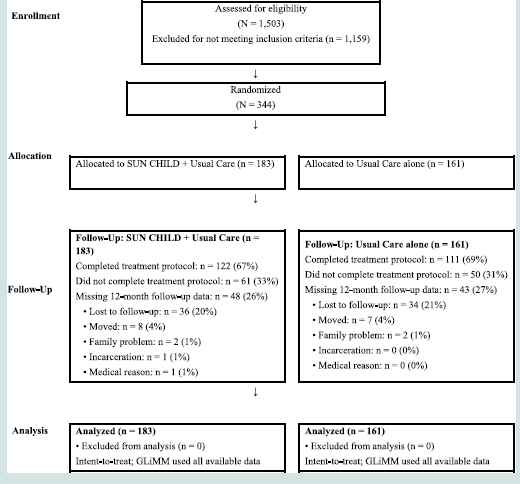 Figure 1:
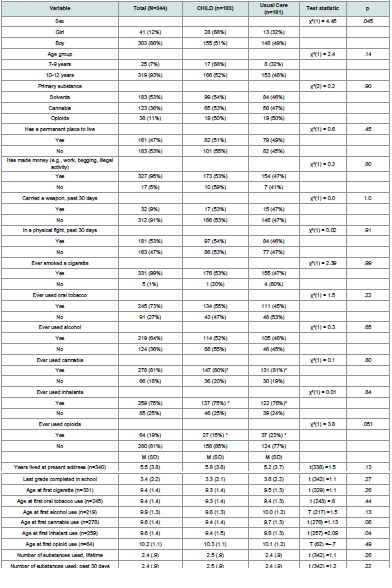 Table 1:Baseline Demographic and Background Characteristics for the Total Sample and Tests of Difference between the CHILD and Usual Care Treatment Arms (N = 344).
Time main effect. Eleven outcomes showed a significant, interpretable Time main effect not qualified by a higher-order interaction: 3 CARRE past-30-day use outcomes (alcohol, opioids, number of substances used), 3 CARRE need-for-service ratings (school, economic, legal help), and 5 SCARED outcomes (all subscales and the total score). Past-30-day alcohol use, opioid use, and number of substances used all declined significantly across the study for the sample as a whole, though the absolute means were close to a floor of zero throughout. Need for school help and need for economic support both showed an early decline from Baseline through Treatment Completion followed by a partial rebound at 6- and 12-month follow up need for legal help was low throughout but higher at Baseline and during treatment than at later time points. SCARED subscale and total scores rose slightly from Baseline to During Treatment and then declined through 12-month follow-up (with the exception of the School Avoidance subscale, for which Baseline and During Treatment did not differ from Treatment Completion).
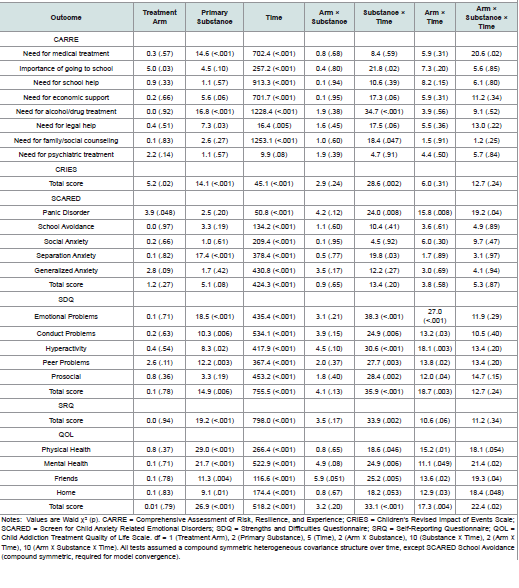 Table 2:Inferential Test Statistics (χ², p) for Treatment Arm, Primary Substance, and Time Main Effects and Their Interactions (N = 344).
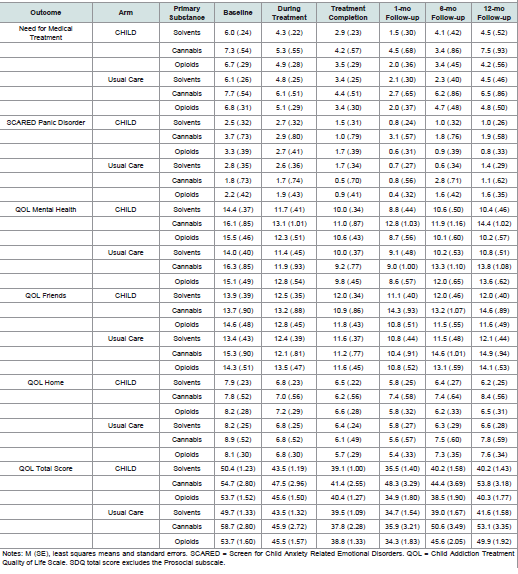 Table 3:Least Squares Means (SE) for the Treatment Arm × Primary Substance × Time Interaction, Outcomes with a Significant Three-Way Interaction (N = 344).
Research Article
Treating Children Ages 7–12 in India for Drug Problems: Randomized Clinical Trial Outcomes
Jones HE1,2*, Middlesteadt-Ellerson R1, Browne T3, Naqati BA4, Kumar M4, Agarwal A5 and Kumar R4
1Department of Obstetrics and Gynecology, University of North
Carolina at Chapel Hill, Chapel Hill, NC, USA
2Departments of Psychiatry and Behavioral Sciences and Obstetrics and Gynecology, School of Medicine, Johns Hopkins University, Baltimore, MD, USA
3Colombo Plan Secretariat, Colombo, Sri Lanka
4Society for Promotion of Youth and Masses (SPYM), New Delhi, India
5National Drug Dependence Treatment Centre, All India Institute of Medical Sciences (AIIMS), New Delhi, India
2Departments of Psychiatry and Behavioral Sciences and Obstetrics and Gynecology, School of Medicine, Johns Hopkins University, Baltimore, MD, USA
3Colombo Plan Secretariat, Colombo, Sri Lanka
4Society for Promotion of Youth and Masses (SPYM), New Delhi, India
5National Drug Dependence Treatment Centre, All India Institute of Medical Sciences (AIIMS), New Delhi, India
*Address for Correspondence:Hendrée E. Jones, Department of Obstetrics and Gynecology,
University of North Carolina at Chapel Hill, Chapel Hill, NC, USA. E-mail Id: hendree_jones@med.unc.edu
Submission: 17 August, 2026
Accepted: 12 September, 2026
Published: 14 September, 2026
Copyright: © 2026 Jones HE, et al. This is an open access article
distributed under the Creative Commons Attribution License, which
permits unrestricted use, distribution, and reproduction in any medium,
provided the original work is properly cited.
Keywords:Cannabis; India; Opioids; Solvents; Street Children;
Substance Use Treatment; Child; Randomized Controlled Trial
Abstract
Background: India has the world’s largest child population, and
children living in street circumstances there report among the highest
childhood substance use rates globally. Culturally appropriate,
rigorously tested treatments for children with substance use problems
remain scarce. This parallel-group, two-arm randomized controlled
trial tested whether CHILD (Child Intervention for Living Drug-free),
a structured curriculum combining one-to-one, attachmentbased
motivational-interviewing counseling with developmentally
sequenced group life-skills modules, added to Usual Care, improved
substance use and psychosocial outcomes compared with Usual Care
alone among children in residential substance use treatment in New
Delhi, India.
Methods: 344 children aged 7–12 entering residential treatment at the Society for Promotion of Youth and Masses (SPYM) in New Delhi were randomized to Usual Care + CHILD (n=183; 28 girls, 155 boys) or Usual Care alone (n=161; 13 girls, 148 boys). Usual Care was a childmodified therapeutic-community program with medical treatment, group psychoeducation, counseling, and aftercare. CHILD added individual motivational-interviewing counseling and eight repeating, developmentally sequenced life-skills modules. Outcomes of substance use, trauma, anxiety, adjustment, distress, and quality of life were tracked through 12 months, with urine drug screens (UDS) objectively confirming substance use at 12 months.
Results: The two arms were well balanced at baseline. Children in both groups showed improvement from baseline to treatment completion across substance use and psychosocial measures. Where the arms diverged, CHILD was associated with more consistent maintenance of these gains through the 12-month followup, particularly in quality-of-life domains related to mental health, friendships, and home life. This pattern was corroborated by urine drug screening at 12 months: children in the CHILD arm showed significantly lower positivity rates than Usual Care across opiates (3.0% vs. 15.6%), amphetamine (0.0% vs. 12.7%), methamphetamine (0.0% vs. 7.9%), and any substance (16.7% vs. 36.9%; all p<.05).
Conclusion: In this first randomized trial of a substance use treatment for children aged 7–12 in India, self-report, clinician-rated, and toxicology data converged to show that residential treatment benefits children, and that adding CHILD further strengthens outcomes. These findings support continued evaluation and scale-up of the intervention. The marked reduction in use of opiates, amphetamine, and methamphetamine is particularly meaningful given the serious toxic effects these substances have on children’s developing brains and bodies.
Methods: 344 children aged 7–12 entering residential treatment at the Society for Promotion of Youth and Masses (SPYM) in New Delhi were randomized to Usual Care + CHILD (n=183; 28 girls, 155 boys) or Usual Care alone (n=161; 13 girls, 148 boys). Usual Care was a childmodified therapeutic-community program with medical treatment, group psychoeducation, counseling, and aftercare. CHILD added individual motivational-interviewing counseling and eight repeating, developmentally sequenced life-skills modules. Outcomes of substance use, trauma, anxiety, adjustment, distress, and quality of life were tracked through 12 months, with urine drug screens (UDS) objectively confirming substance use at 12 months.
Results: The two arms were well balanced at baseline. Children in both groups showed improvement from baseline to treatment completion across substance use and psychosocial measures. Where the arms diverged, CHILD was associated with more consistent maintenance of these gains through the 12-month followup, particularly in quality-of-life domains related to mental health, friendships, and home life. This pattern was corroborated by urine drug screening at 12 months: children in the CHILD arm showed significantly lower positivity rates than Usual Care across opiates (3.0% vs. 15.6%), amphetamine (0.0% vs. 12.7%), methamphetamine (0.0% vs. 7.9%), and any substance (16.7% vs. 36.9%; all p<.05).
Conclusion: In this first randomized trial of a substance use treatment for children aged 7–12 in India, self-report, clinician-rated, and toxicology data converged to show that residential treatment benefits children, and that adding CHILD further strengthens outcomes. These findings support continued evaluation and scale-up of the intervention. The marked reduction in use of opiates, amphetamine, and methamphetamine is particularly meaningful given the serious toxic effects these substances have on children’s developing brains and bodies.
Abbreviations
CHILD: CHIld Intervention for Living Drug-free; SPYM: Society
for Promotion of Youth and Masses; CARRE: Comprehensive
Assessment of Risk, Resilience, and Experience; CRIES: Children’s
Revised Impact of Events Scale; SCARED: Screen for Child Anxiety
Related Emotional Disorders; SDQ: Strengths and Difficulties
Questionnaire; SRQ-20: Self-Reporting Questionnaire-20; QOL:
Child Addiction Treatment Quality of Life Scale; GLiMM:
Generalized Linear Mixed Model
Introduction
India is home to the largest child population in the world,
approximately 440 million children, including 243 million
adolescents, 54% of whom are 10-14 years of age [1]. India’s large
child population reflects, in part, historical rates of population
growth; the country’s National Family Planning Program, developed
in response to concerns about overpopulation, has been credited with
substantially accelerating the decline in fertility through expanded
access to temporary and permanent contraceptive methods and a
subsequent shift toward a reproductive and child health approach,
and since then both fertility and mortality in India have declined
significantly [2-4]. Estimates of the number of children living in
street circumstances in India vary widely by methodology, ranging
from several hundred thousand to historical projections as high as 18
million nationally, with a 2011 census-based enumeration identifying
approximately 51,000 street children in Delhi alone, most between 7
and 14 years of age [1,5]. A 2024 community-based epidemiological
study using respondent-driven sampling in nine districts of Delhi
found that 49% of 766 street children ages 7-18 had used a substance
in the past year, consistent with the 40-70% range reported across
smaller regional surveys, with substance use associated with being
male, lack of family psychosocial support, income from illegal
activity, family and peer substance use, and lack of basic amenities
[6]. An earlier cross-sectional analysis of 302 children (284 boys, 18
girls) ages 7-12 entering treatment at the same New Delhi treatment
and rehabilitation center, an earlier subset of the cohort reported in
the present trial, similarly found that solvents, cannabis, and opioids
were the predominant substances at treatment entry. This study also
examined whether sex and age group predicted children’s substance
use history and current use, a comparison that had previously been
largely lacking in the literature on treatment-seeking children in India
[7]. Substance use in this population commonly begins between 5 and
7 years of age [6,8]. Tobacco, alcohol, and inhalants are the substances
most commonly reported among children in street circumstances
generally, while among children specifically seeking substance use
treatment in Delhi, solvents, opioids, and cannabis predominate [6,8].
Given overpopulation and poverty, India is a setting of substantial
risk for substance use, and children living in street circumstances are
highly vulnerable as they navigate daily survival [6].
Despite this scale of need, evidence-based treatment options
for children with substance use problems remain scarce in India
and globally. A 2022 narrative review of substance use disorders in
children and adolescents concluded that evidence for management of
these disorders in children is scarce worldwide, that children in street
circumstances are among the most severely affected populations, and
that age-appropriate psychosocial treatment, rather than approaches
developed for and validated in adults, is needed to close this gap [8].
To date, there is a lack of interventions that have been rigorously
evaluated for use with children.
CHILD (Child Intervention for Living Drug-free) (formerly
known as the Child Addiction Treatment (CAT) protocol) was first
developed for opioid-using boys and girls in Afghanistan [9]. CHILD
is grounded in social-cognitive and social learning theory, biosocial/
emotion-regulation theory, and attachment theory, and delivers oneto-
one, attachment-based motivational interviewing together with
group-based life-skills modules (the “Suitcase for Life”) covering
artistic expression, communication, stress management, drugharm
education, nutrition and health, personal safety, citizenship,
and future-oriented goal setting. In a study of 783 children ages
4–18 who received CHILD in outpatient or residential treatment in
Afghanistan, significant improvement was observed from treatment
entry to completion across behavioral, trauma, and psychiatric
symptom measures [9]. Revisions to CAT/CHILD that yielded the
current CHILD protocols were informed by qualitative findings
from staff and beneficiaries and by a convened panel of experts
from Afghanistan, Australia, Brazil, India, Pakistan, Paraguay, and
the United States. For this study, CHILD was further tailored to the
Indian context (language, images, and activities) in collaboration
with the Society for Promotion of Youth and Masses (SPYM), a New
Delhi-based non-profit organization that has provided substance
use treatment services to children since 2010. While the present
trial was still enrolling participants, a companion qualitative study
conducted separate focus groups with children, parents/caregivers,
and treatment staff at the same two SPYM centers to identify barriers
to and benefits of the CHILD curriculum; children valued interactive,
expressive program content and skill-building activities, while parents
and staff emphasized, respectively, concerns about sustained recovery
and family/community support, and a need for simpler, more visual
materials [10]. These themes directly informed ongoing refinement of
the curriculum for future work.
Reduction of child substance use in India is urgently needed, and
this study was undertaken to provide the first randomized evaluation
of a treatment for children ages 7–12 with substance use problems in
a residential treatment setting. The purpose of the present study was
to examine the extent to which CHILD, delivered in addition to Usual
Care, improved substance use and psychosocial outcomes relative
to Usual Care alone among children entering residential substance
use treatment in New Delhi, India. Outcomes examined included
substance use and clinician-rated need for services (assessed using
the Comprehensive Assessment of Risk, Resilience, and Experience
[CARRE]), post-traumatic stress symptoms (Child Revised Impact of
Events Scale, CRIES-8), anxiety symptoms (Screen for Child Anxiety
Related Emotional Disorders, SCARED), behavioral and emotional
adjustment (Strengths and Difficulties Questionnaire, SDQ), general
psychological distress (Self-Reporting Questionnaire, SRQ-20), and
quality of life (Child Addiction Treatment Quality of Life Scale, CATQOL).
Materials and Methods
Ethics approval:
The study was approved by Institutional Review Boards in both
India and the United States. Written informed consent was obtained
from a parent or legal guardian of each child, and verbal assent was
obtained from the participating child. Children and families who
declined participation continued to receive all usual SPYM and other
local services without penalty.
Study design:
This was a parallel-group, two-arm randomized controlled
trial in which children ages 7–12 years entering SPYM residential
substance use treatment in New Delhi were randomized to receive
either (1) the CHILD intervention protocol in addition to Usual
Care, or (2) Usual Care alone. Randomization used a stratified block
design with random block sizes (blocks of 2, 4, or 6), stratified by sex
(boy/girl), age group (7–9 vs. 10–12 years), and primary substance
used (cannabis, opioids, or solvents), and allocated participants
in an overall 3:1 boy:girl ratio consistent with the sex distribution
of children entering treatment for substance use in this age group
in Delhi. Allocation was concealed using opaque, sequentially
numbered envelopes prepared independently of study staff; the
SPYM Research Assistant opened the designated envelope only
after the baseline assessment was completed and then informed the
family of the assigned condition. Neither the site investigators nor
participants knew a child’s assignment before the baseline assessment
was finished. Outcome and mediator measures were administered at
baseline, during treatment, at treatment completion, and at 1-, 6-, and
12-month post-treatment follow-up.
Setting:
The study was conducted at SPYM’s Centre for Children in Need
of Care and Protection in New Delhi, which has provided treatment
and rehabilitation services to children living in street circumstances
who use substances since 2010. The treatment facility for boys (Delhi
Gate) is a 50-bed unit, and the facility for girls (Purda Bagh) is a 20-
bed unit; both employ a multi-disciplinary treatment model and
are recognized by the Government of Delhi as specialist treatment
settings for substance-using children.
Participants:
Most children are referred by the Child Welfare Committee of
the Government of Delhi, which is responsible for children without
family support or supervision. Other sources of referrals were from
parents or caregivers bringing their children to treatment. Boys and
girls entering SPYM residential treatment were invited to participate.
Inclusion criteria were: age 7–12 years; entering SPYM residential
treatment for substance use; reported substance use (other than
tobacco alone) at least once weekly during the 3 months prior to
admission; and availability of parent/guardian informed consent and
child assent. Children were excluded if they were outside the eligible
age range, refused residential treatment, were unwilling to participate
or provide consent, or were unable to summarize in their own words
what participation in the study involved.
Screening, recruitment, and data protection:
Screening was completed by trained SPYM intake staff for all
children entering the Delhi Gate and Purda Bagh centers, using a
standardized paper screening form together with a verbal discussion
with the child and, when available, parents or guardians. Eligible
children were assigned a unique, de-identified participant ID; the
master list linking participant ID to identifying information was
maintained only as a hard-copy document in double-locked files at
the SPYM administrative office and was never entered into the study
database. All other study data were entered into the University of
North Carolina’s REDCap data management system on a passwordprotected,
encrypted server with built-in range and consistency
checks. Data entered by Indian study staff were reviewed by University
of North Carolina project staff on an ongoing basis, with data queries
returned weekly and after data collection was completed. All data
were reviewed and approved by the statistician prior to analysis.
Interventions:
CHILD + Usual Care. CHILD is a culturally adapted psychosocial
intervention that combines individual, attachment-based
motivational-interviewing counseling with group-delivered life-skills
modules, provided 5 days per week for approximately 1 hour per group
session for the duration of the child’s residential stay. The eight lifeskills
modules (“Suitcase for Life”) that include: Artistic Expression,
Communicating and Relating, Dealing with Stress, Understanding
Harms of Drugs, Keeping the Mind and Body Healthy, Personal
Safety, Being a Good Citizen, and Dreaming about the Future.
These topics incorporate mindfulness, dialectical-behavior-therapyinformed
emotion-regulation skills, relapse-prevention and drugrefusal
skills, motivational-interviewing techniques, art therapy, and
structured story-telling, and are sequenced developmentally with
age-appropriate delivery for younger versus older children. Session
content, words, images, and activities were adapted to the Indian
context in collaboration with SPYM staff.
Usual Care. SPYM’s usual care follows a multi-disciplinary, childmodified
therapeutic-community model with a 12-step foundation,
in which children live in a substance-free, structured residential
environment (approximately 90 days) that includes daily peer-run
“Child Parliament” meetings, group education classes 5 days per
week organized by developmental/age level, discussion sessions on
topics such as self-esteem and drug refusal, elements of the 12 Steps of
Narcotics Anonymous, sports and leisure time, and a structured daily
schedule of meals and sleep appropriate to children’s developmental
needs. All children receive medical assessment and treatment
from physicians and nursing staff trained in adolescent substance
use care (through intensive advocacy efforts, an arrangement was
secured by SPYM, to provide comprehensive medical assessment,
including initial detoxification support, for all the children, with
referral to government hospitals assuring intensive medical and /
or psychiatric stabilization), individual and group counseling from
trained counselors supported by peer counselors who are children in
sustained recovery, and a 10-module life-skills curriculum addressing
functional literacy, self-esteem, harms of drug use, refusal skills,
healthy relationships, and vocational and future planning. Older
children additionally receive basic first-aid training and vocational
exposure (e.g., computer literacy, cooking, basic electrical and
plumbing skills). All children, whether they complete treatment or
not, receive 12 weeks of community-based aftercare from outreach
para-professional staff. Drug use is not, itself, a discharge criterion
in either study arm; children may be discharged for voluntary
withdrawal or for violence that threatens the safety of the community.
Measures:
Because of low literacy among this population, all measures were
administered by trained SPYM clinical staff via structured interview
rather than self-administration, in the language chosen by the child.
Measures were selected to be developmentally appropriate, with an
overlapping but not identical battery for younger and older children.Screening Form. A 16-item, 3-point (0 = None, 1 = Some, 2 = A lot) screening instrument covering behavioral/emotional/social problems, psychological distress, trauma exposure, physical health, and substance use; a score above 0 on any domain prompted referral for outpatient assessment.
CHILD Comprehensive Assessment of Risk, Resilience, and
Experience (CHILD CARRE). A validated structured intervieweradministered
assessment of lifetime and past-30-day substance use
(alcohol, cannabis, inhalants/solvents, sedatives, cocaine, stimulants,
hallucinogens, and opioids), age at first use, and 7 clinician severity
ratings (0–9) of need for services in the domains of medical treatment,
school help, economic support, substance use/drug treatment, legal
help, family/social counseling, and psychiatric help [11,12].
Strengths and Difficulties Questionnaire (SDQ). An internationally validated 25-item, 5-subscale (Emotional Symptoms, Conduct Problems, Hyperactivity, Peer Problems, Prosocial) measure of behavioral, emotional, and social functioning over the prior 6 months, each item scored 0–2; a total difficulties score sums the four problem subscales, omitting the Prosocial subscale [13,14].
Strengths and Difficulties Questionnaire (SDQ). An internationally validated 25-item, 5-subscale (Emotional Symptoms, Conduct Problems, Hyperactivity, Peer Problems, Prosocial) measure of behavioral, emotional, and social functioning over the prior 6 months, each item scored 0–2; a total difficulties score sums the four problem subscales, omitting the Prosocial subscale [13,14].
Child Revised Impact of Events Scale (CRIES-8). An 8-item,
4-point (0 = Not at all to 3 = Often) screening measure of posttraumatic
stress symptoms [15].
Screen for Child Anxiety Related Emotional Disorders (SCARED). A 41-item, 3-point (0–2) measure covering symptoms over the prior 3 months, with 5 subscales (13-item Panic Disorder, 9-item Generalized Anxiety, 8-item Separation Anxiety, 7-item Social Anxiety, 4-item School Avoidance) and a total score [16].
Self-Reporting Questionnaire (SRQ-20). A 20-item, World Health Organization-developed yes/no (0/1) screen for psychiatric disturbance, referencing symptoms over the prior 30 days, validated for use in low- and middle-income settings [17]. Child Addiction Treatment Quality of Life Scale (CAT-QOL). A 20-item, 5-point (1 = Never or Almost Never to 5 = Always or Almost Always) measure of quality of life over the prior 3 months, with 4 subscales (6-item Physical Health, 5-item Mental Health, 5-item Friends, 4-item Home) and a total score (9).
Screen for Child Anxiety Related Emotional Disorders (SCARED). A 41-item, 3-point (0–2) measure covering symptoms over the prior 3 months, with 5 subscales (13-item Panic Disorder, 9-item Generalized Anxiety, 8-item Separation Anxiety, 7-item Social Anxiety, 4-item School Avoidance) and a total score [16].
Self-Reporting Questionnaire (SRQ-20). A 20-item, World Health Organization-developed yes/no (0/1) screen for psychiatric disturbance, referencing symptoms over the prior 30 days, validated for use in low- and middle-income settings [17]. Child Addiction Treatment Quality of Life Scale (CAT-QOL). A 20-item, 5-point (1 = Never or Almost Never to 5 = Always or Almost Always) measure of quality of life over the prior 3 months, with 4 subscales (6-item Physical Health, 5-item Mental Health, 5-item Friends, 4-item Home) and a total score (9).
Statistical methods:
Analyses followed an intent-to-treat approach and were
conducted within the generalized linear mixed model (GLiMM)
framework, which reduces to the linear mixed model (LMM) for
normally distributed criteria and to the generalized linear model
(GLM/GLiM) for criteria measured on a single occasion, and which
accommodates missing data without requiring complete cases,
an important feature given the multiple post-treatment follow-up
assessments [18]. All hypothesis tests were Wald tests of the unique
variance associated with each effect, adjusted for all other effects in
the model.
Baseline comparability of the two treatment arms on
demographic, background, lifetime substance use, and CARRE
severity-rating variables was tested with a model containing a
single fixed effect for Treatment Arm; dichotomous criteria were
modeled as binomial, count variables (e.g., past-30-day days of use)
as overdispersed Poisson, and continuous variables (e.g., age at first
use, severity ratings) as normal. Because disproportionality in the
number of girls and younger children, combined with imbalance
across primary substance groups and differential loss to followup,
produced degenerate solutions when Sex and Age Group were
included as covariates in the outcome models, these two variables
were examined only in separate baseline-comparison models (each
with a single fixed effect for Sex or Age Group) and were not retained
in the primary outcome analyses. This baseline comparison approach
extends an earlier cross-sectional analysis of substance use patterns
by sex and age group in a subset of this treatment-seeking cohort [7].
For the primary outcome analyses, treatment completion
(dichotomous) was modeled with fixed effects for Treatment Arm,
Primary Substance Used, and their interaction. All other criteria
measured repeatedly across time were modeled with a repeatedmeasures
LMM with fixed effects for Treatment Arm (CHILD
vs. Usual Care), Primary Substance Used (Cannabis vs. Solvents
vs. Opioids), assessment Time (Baseline, During Treatment,
Treatment Completion, 1-, 6-, and 12-month follow-up), and their
two- and three-way interactions, under a compound-symmetric
heterogeneous covariance structure over time (compound symmetric
for SCARED School Avoidance, which was necessary to permit
model convergence). Because the During Treatment and Treatment
Completion means for past-30-day substance use were at or near
the floor (values of 0), models for these outcomes were restricted to
the Baseline vs. 12-month follow-up comparison to achieve a stable
solution.
Given that lower-order effects are not meaningfully interpretable
in the presence of a higher-order effect involving the same terms,
post hoc testing focused on the highest-order significant interaction
for each outcome; when no interaction reached significance, testing
focused on significant main effects. Significant interactions involving
Time were followed by tests of simple main effects of Time within
each level of the other factor(s), simple pairwise contrasts (Baseline
vs. Treatment Completion; Treatment Completion vs. 12-month
follow-up), and linear-trend contrasts comparing rate of change
across conditions. All analyses were conducted using SAS (SAS
Institute, Cary, NC) GLIMMIX and NLMIXED procedures.
As a supplementary, objective corroboration of the self- and clinician-reported CARRE substance use outcomes, urine drug screen (UDS) results collected at the 12-month follow-up visit were compared between treatment arms. The UDS panel tested for opiates, cannabis, amphetamine, methamphetamine, and alcohol (via breath test); solvents were excluded from this comparison because no reliable urine assay for inhalant use exists, consistent with why solvent use was assessed only by self-report elsewhere in this trial. For each substance, and for a composite indicator of any substancepositive result, Treatment Arm groups were compared using Fisher’s exact test on the 2×2 table of positive/negative results among children with a valid (Done) UDS result at 12 months.
As a supplementary, objective corroboration of the self- and clinician-reported CARRE substance use outcomes, urine drug screen (UDS) results collected at the 12-month follow-up visit were compared between treatment arms. The UDS panel tested for opiates, cannabis, amphetamine, methamphetamine, and alcohol (via breath test); solvents were excluded from this comparison because no reliable urine assay for inhalant use exists, consistent with why solvent use was assessed only by self-report elsewhere in this trial. For each substance, and for a composite indicator of any substancepositive result, Treatment Arm groups were compared using Fisher’s exact test on the 2×2 table of positive/negative results among children with a valid (Done) UDS result at 12 months.
Results
Participants and dropouts:
Children (N=1,503) and were screened from March of 2019 to
August of 2022. Of those screened, 365 children screened for eligibility
at the SPYM Delhi Gate and Purda Bagh centers, 344 children (41
girls, 303 boys) between the ages of 7 and 12 met eligibility criteria,
consented/assented, and were randomized: 183 (28 girls, 155 boys)
to CHILD + Usual Care and 161 (13 girls, 148 boys) to Usual Care
alone [Figure 1]. The final 12 month follow-ups were completed by
October 2023.
Baseline demographic and background comparability:
[Table 1] shows that the two treatment arms were well balanced at
baseline. Consistent with the a priori 3:1 randomization target, the
CHILD arm enrolled a somewhat higher proportion of girls than the
Usual Care arm (68% vs. 32% of all girls enrolled, χ²(1) = 4.45, p =
.045), and the arms did not differ significantly on age group, primary
substance (53% solvents, 36% cannabis, 11% opioids overall),
housing stability, income-generating activity, weapon-carrying,
fighting, tobacco/alcohol/cannabis/inhalant/opioid use, years at
current address, grade completed in school, or age at first use of any
substance. Of the 7 CHILD CARRE clinician severity ratings, only
need for legal help differed by arm (higher, on average, in CHILD;
p = .04), and few children overall were rated as needing legal or
psychiatric help. In addition to the variables in Table 1, at baseline 3
children tested positive for HIV, 5 for hepatitis B, 1 for hepatitis C,
and 5 for tuberculosis. Treatment was provided to all children with
identified illnesses.
Sample characteristics and sex/age-group differences at baseline:
As a whole, the sample was characterized by extremely high
lifetime use of inhalants (75%) and cannabis (81%), and comparatively
lower lifetime use of opioids (19%). Past-30-day use was high for
both solvents and cannabis. Mean age at first use across substances
clustered around 9-10 years (only 25 children in the sample were
younger than 10 at enrollment). With the exception of legal and
psychiatric help, clinician ratings of need for services were generally
high, most notably for substance use treatment and family/social
counseling.Boys, relative to girls, showed a consistent (though not always statistically significant) pattern of greater lifetime substance use, earlier age at first use, higher past-30-day use, and greater rated need for services other than legal and psychiatric help. Adjustment-measure differences between boys and girls were fewer and less consistent (e.g., girls had fewer peer problems than boys on the SDQ, on average, but higher SCARED social anxiety scores). Differences between the 7-9 and 10-12 year age groups were infrequent, apart from differences in age at first use that are an artifact of the age-based grouping itself;
one substantive exception was solvent use, for which the 7-9 year-old
group had a higher probability of lifetime use, a younger age at first
use, and higher past-30-day use than the 10-12 year-old group. This
overall pattern of modest but consistent sex differences, alongside
largely comparable substance use histories across the two age groups,
is consistent with findings from an earlier cross-sectional analysis of a
subset of this treatment-seeking cohort [7].
Outcome analyses:
[Table 2] presents the inferential test statistics and p values for all
main effects and interactions except the non-significant Treatment
Arm × Primary Substance interaction (not significant for any
outcome). Consistent with convention, results are organized from
main effects to first-order interactions to the second-order (threeway)
interaction, with lower-order effects discussed only when they
are not subsumed within a higher-order, significant effect for that
outcome.Time main effect. Eleven outcomes showed a significant, interpretable Time main effect not qualified by a higher-order interaction: 3 CARRE past-30-day use outcomes (alcohol, opioids, number of substances used), 3 CARRE need-for-service ratings (school, economic, legal help), and 5 SCARED outcomes (all subscales and the total score). Past-30-day alcohol use, opioid use, and number of substances used all declined significantly across the study for the sample as a whole, though the absolute means were close to a floor of zero throughout. Need for school help and need for economic support both showed an early decline from Baseline through Treatment Completion followed by a partial rebound at 6- and 12-month follow up need for legal help was low throughout but higher at Baseline and during treatment than at later time points. SCARED subscale and total scores rose slightly from Baseline to During Treatment and then declined through 12-month follow-up (with the exception of the School Avoidance subscale, for which Baseline and During Treatment did not differ from Treatment Completion).
Primary Substance × Time interaction. Ten outcomes showed a
significant Primary Substance × Time interaction: CARRE need for
alcohol/drug treatment and need for family/social counseling, all 6
SDQ subscale/total scores, the SRQ total score, and QOL Physical
Health. Across these outcomes the general pattern was a decline in
means through Treatment Completion followed by partial rebound
by 12-month follow-up, but the magnitude and timing of change
differed by primary substance: children whose primary substance
was solvents showed the most consistent significant improvement
from Baseline to Treatment Completion. The cannabis group also
showed a robust rebound from Treatment Completion to 12-month
follow-up. The opioid group changed the least across the trial, such
that by 12-month follow-up the three substance groups had largely
converged.
Treatment Arm × Time interaction. For all outcomes with a significant Treatment Arm × Time interaction not subsumed by the three-way interaction, post hoc simple-effect tests were significant, with the exceptions that SDQ Prosocial, SDQ total score, and QOL Physical Health did not differ significantly by arm at baseline, the Time simple effect was not significant for SDQ Prosocial or QOL Physical Health, and the 12-month arm comparison was not significant for
Treatment Arm × Time interaction. For all outcomes with a significant Treatment Arm × Time interaction not subsumed by the three-way interaction, post hoc simple-effect tests were significant, with the exceptions that SDQ Prosocial, SDQ total score, and QOL Physical Health did not differ significantly by arm at baseline, the Time simple effect was not significant for SDQ Prosocial or QOL Physical Health, and the 12-month arm comparison was not significant for
SDQ Emotional Problems or QOL Physical Health.
Treatment Arm × Primary Substance × Time interaction. Six outcomes showed a significant three-way interaction: CARRE need for medical treatment, SCARED Panic Disorder, and the QOL Mental Health, Friends, Home, and total scores (Table 3). Time simple effects within each of the six Treatment Arm × Primary Substance cells were significant except for CHILD × Opioids (p = .09). Baseline differences between arms were significant for need for medical treatment and QOL Mental Health and total score; by 12-month follow-up, arm differences were significant for QOL Mental Health, Friends, Home, and total score. Pairwise contrasts of Baseline vs. Treatment
Treatment Arm × Primary Substance × Time interaction. Six outcomes showed a significant three-way interaction: CARRE need for medical treatment, SCARED Panic Disorder, and the QOL Mental Health, Friends, Home, and total scores (Table 3). Time simple effects within each of the six Treatment Arm × Primary Substance cells were significant except for CHILD × Opioids (p = .09). Baseline differences between arms were significant for need for medical treatment and QOL Mental Health and total score; by 12-month follow-up, arm differences were significant for QOL Mental Health, Friends, Home, and total score. Pairwise contrasts of Baseline vs. Treatment
Completion within each arm were significant for the great majority
of the substance-by-arm cells (12/12 for Solvents, 11/12 for Opioids,
9/12 for Cannabis), indicating that improvement from baseline
to treatment completion was broad across arms and substance
groups; contrasts of Treatment Completion vs. 12-month follow-up
were more variable, generally non-significant for need for medical
treatment and QOL Physical Health regardless of arm or substance,
but significant for the opioid group in the CHILD arm across the
remaining four outcomes.
Twelve-month urine drug screen (UDS) results:
Among children with a valid result, UDS positivity at 12 months
was consistently lower in the CHILD arm than the Usual Care arm
across every substance tested. Opiate (3.0% vs. 15.6%, Fisher’s p =
.016), amphetamine (0.0% vs. 12.7%, p = .003), and methamphetamine
(0.0% vs. 7.9%, p = .026) were each significantly lower in the CHILD
arm, cannabis showed a similar but non-significant pattern (12.1%
vs. 23.1%, p = .113), and alcohol did not differ between arms (2.4%
vs. 2.2%, p = 1.00). A composite indicator of any substance-positive
UDS result at 12 months was positive for 16.7% of the CHILD arm
compared with 36.9% of the Usual Care arm (p = .011). Solvents could
not be evaluated in this comparison because a valid urine solvent
assay was not available. The marked reduction in use of opiates,
amphetamine, and methamphetamine is particularly meaningful
given the serious toxic effects these substances have on children’s
developing brains and bodies.
Discussion
This study provides the first randomized evaluation of a structured
intervention for children ages 7–12 with substance use problems
entering residential treatment. Across a sample of 344 children,
a sample characterized by very high rates of lifetime inhalant and
cannabis use, first use often before age 10, and substantial unmet
need for medical, educational, and family/social support at treatment
entry, substance use, post-traumatic stress, anxiety, and quality-oflife
outcomes improved from baseline through treatment completion
in both study arms, consistent with the intensive, multi-disciplinary
residential milieu shared by CHILD and Usual Care. Improvement in
several outcomes was not fully sustained through 12-month followup,
with partial rebound most evident for children whose primary
substance was cannabis or solvents.
Where CHILD + Usual Care and Usual Care alone diverged, the pattern favored CHILD: for outcomes with significant Treatment Arm × Time or three-way interactions, the CHILD arm more consistently reached comparable or better levels of functioning at 12-month follow-up, most clearly for quality of life in the mental health, friends, and home domains, and for clinician-rated need for medical treatment. These findings are broadly consistent with prior evidence from the original CAT/CHILD intervention model in Afghanistan, where significant improvement was likewise observed across trauma, behavioral, and psychiatric symptom domains from treatment entry to completion [9], and suggest that a developmentally tailored, culturally adapted life-skills and motivational-counseling intervention can add measurable benefit to an already resourceintensive residential program for children with substance use problems. The present findings also converge with a 2024 communitybased study of children in street circumstances in Delhi, which found that lack of family psychosocial support, family and peer substance use, and lack of basic amenities were independently associated with substance use in this population [6]. These are consistent with the risk domains that CHILD directly targets through its family/socialcounseling content, communication and relationship-building modules, and personal-safety curriculum, offering one explanation for why its incremental benefit was concentrated in the family/home and psychosocial quality-of-life domains.
The 12-month urine drug screen findings provide an important, objective corroboration of this self- and clinician-reported pattern. Unlike the CARRE past-30-day use items, which are subject to recall and social-desirability bias, UDS results are a biological, non-selfreport measure of recent use, and they told the same story: children in the CHILD arm were significantly less likely than children in the Usual Care arm to test positive for opiates, amphetamine, or methamphetamine at 12 months, and were less than half as likely to test positive for any substance (16.7% vs. 36.9%). That this objective measure aligned with the subjective quality-of-life and need-forservices findings, rather than diverging from them, as self-report and biological measures sometimes do, strengthens confidence that CHILD’s benefit at 12 months reflects a real difference in children’s post-treatment functioning rather than an artifact of differential reporting between arms. The absence of a group difference in cannabis (though numerically favoring CHILD) and alcohol positivity, set against the clear opiate and stimulant findings, suggests CHILD’s protective effect at 12 months may be strongest for the substances associated with the greatest medical severity in this cohort, though the modest cell sizes for any single substance warrant caution in overinterpreting which specific substances differ.
Where CHILD + Usual Care and Usual Care alone diverged, the pattern favored CHILD: for outcomes with significant Treatment Arm × Time or three-way interactions, the CHILD arm more consistently reached comparable or better levels of functioning at 12-month follow-up, most clearly for quality of life in the mental health, friends, and home domains, and for clinician-rated need for medical treatment. These findings are broadly consistent with prior evidence from the original CAT/CHILD intervention model in Afghanistan, where significant improvement was likewise observed across trauma, behavioral, and psychiatric symptom domains from treatment entry to completion [9], and suggest that a developmentally tailored, culturally adapted life-skills and motivational-counseling intervention can add measurable benefit to an already resourceintensive residential program for children with substance use problems. The present findings also converge with a 2024 communitybased study of children in street circumstances in Delhi, which found that lack of family psychosocial support, family and peer substance use, and lack of basic amenities were independently associated with substance use in this population [6]. These are consistent with the risk domains that CHILD directly targets through its family/socialcounseling content, communication and relationship-building modules, and personal-safety curriculum, offering one explanation for why its incremental benefit was concentrated in the family/home and psychosocial quality-of-life domains.
The 12-month urine drug screen findings provide an important, objective corroboration of this self- and clinician-reported pattern. Unlike the CARRE past-30-day use items, which are subject to recall and social-desirability bias, UDS results are a biological, non-selfreport measure of recent use, and they told the same story: children in the CHILD arm were significantly less likely than children in the Usual Care arm to test positive for opiates, amphetamine, or methamphetamine at 12 months, and were less than half as likely to test positive for any substance (16.7% vs. 36.9%). That this objective measure aligned with the subjective quality-of-life and need-forservices findings, rather than diverging from them, as self-report and biological measures sometimes do, strengthens confidence that CHILD’s benefit at 12 months reflects a real difference in children’s post-treatment functioning rather than an artifact of differential reporting between arms. The absence of a group difference in cannabis (though numerically favoring CHILD) and alcohol positivity, set against the clear opiate and stimulant findings, suggests CHILD’s protective effect at 12 months may be strongest for the substances associated with the greatest medical severity in this cohort, though the modest cell sizes for any single substance warrant caution in overinterpreting which specific substances differ.
The finding that children whose primary substance was opioids
changed the least during treatment, and showed the fewest significant
12-month gains regardless of study arm, is notable given the very
limited pharmacotherapy options for pre-adolescent children with
opioid use and warrants dedicated attention in future intervention
refinement, including closer integration of medical and psychosocial
care for this subgroup. The convergence of substance groups by
12-month follow-up for outcomes with a Primary Substance × Time
interaction likewise suggests that early differences in severity across
substance groups narrow over the course of treatment and follow-up,
but that continued support after discharge may be needed to sustain
early gains, particularly for children using cannabis and solvents. This
quantitative pattern of partial rebound after treatment completion
is consistent with a companion qualitative study conducted with
children, parents/caregivers, and staff at the same two SPYM centers,
in which parents, despite reporting clear behavioral improvements
after treatment, voiced ongoing concern about their child’s return to
substance use, peer influence after discharge, and a lack of community,
educational, and vocational support once children returned home,
and staff independently called for simplified, more visual curriculum
materials to strengthen engagement [10]. Together, the quantitative
rebound observed here and these qualitative caregiver and staff
perspectives point in the same direction: sustaining CHILD’s gains
likely requires strengthening aftercare, family-level support, and
community reintegration components beyond the residential
treatment episode itself.
Several limitations should be considered when interpreting these
findings. Girls and children ages 7–9 were a small minority of the
enrolled sample (12% and 7%, respectively), reflecting the sex and age
distribution of children entering treatment for substance use in Delhi
during the recruitment period; the resulting statistical imbalance,
compounded by imbalance across primary substance groups and
differential attrition at follow-up, made it infeasible to retain Sex and
Age Group in the primary outcome models, so this study cannot speak
to whether CHILD’s benefit differs by sex or age. All measures were
interviewer-administered because of low literacy in this population,
which reduces the risk of comprehension-related missing data but
introduces the possibility of social-desirability or interviewer effects,
particularly for sensitive items such as substance use and sexual
history. The study was conducted at a single organization (SPYM)
in New Delhi, and although SPYM operates the only two dedicated
residential substance use treatment centers of their kind for children
in the city, findings may not generalize to other regions of India or
to children in outpatient or non-residential settings. Consistent with
the ethical rationale described in the study protocol, no no-treatment
or usual-services-only-outside-residential-care comparison arm
was feasible, so this trial cannot determine how much of the overall
improvement seen in both arms reflects the residential milieu itself
as opposed to either active treatment component. Finally, some
outcomes, particularly those reflecting a floor effect in past-30-day
substance use during and immediately after residential treatment,
required a restricted (Baseline vs. 12-month) statistical comparison,
limiting the ability to characterize the trajectory of change during
treatment for those measures.
Clinical significance and implications for the United States:
Beyond its findings in the Indian context, this trial has direct
clinical relevance to the United States, where structured treatment for
children with substance use problems is similarly scarce. Substance
use in the U.S. also begins well before adulthood: national surveillance
of adolescents assessed for substance use disorder treatment shows
that use is frequently driven by stress, mood regulation, and peer
context rather than adult-pattern dependence, motivations closely
paralleling the trauma- and peer-driven use patterns described among
children in street circumstances in this trial and underscoring the
relevance of an emotion-regulation- and life-skills-based model like
CHILD to younger U.S. populations [19]. Nationally, only 19.3% of
people who needed substance use treatment in 2024 received it, and
among adolescents 12–17 with a past-year substance use disorder,
the great majority did not receive treatment and did not perceive a
need for it, pointing to gaps in both access and engagement that a
developmentally tailored, non-confrontational intervention may help
address [20]. Access is particularly constrained for the youngest and
highest-severity patients: a national “secret shopper” survey of U.S.
residential addiction treatment facilities serving adolescents found
that only about half had an immediately available bed, average wait
times approached a month among facilities with waitlists, and average
daily costs exceeded $850, with many facilities requiring payment up
front. These barriers are the ones that fall hardest on the low-resource,
unstably housed families for whom a scalable, non-pharmacological,
group-based model would offer the greatest benefit [21].
Several features of CHILD map onto documented needs in
U.S. child and adolescent treatment settings. First, CHILD was
designed for younger children (7–12 years) than most existing
U.S. adolescent-focused programs and interventions, addressing
a developmental range for which few structured, manualized
psychosocial protocols exist; this is directly relevant given that most
U.S. adults with SUD report an onset of substance use in adolescence
or earlier, making early, developmentally appropriate intervention a
plausible upstream prevention target [20]. Second, CHILD’s traumainformed,
attachment-based, and non-confrontational approach
is consistent with SAMHSA’s emphasis on trauma-informed care
for youth experiencing homelessness, housing instability, or outof-
home placement, populations in the United States (runaway
and homeless youth, youth in foster care or juvenile-legal system
custody) that share important structural and clinical parallels with
street-connected children in Delhi, including high rates of trauma
exposure, family disruption, and limited access to family-based
treatment engagement. Third, because CHILD is delivered as a
structured, trainable group curriculum layered onto an existing
residential milieu rather than requiring specialized medical staff or
medication, it may offer a lower-cost, more scalable model for U.S.
residential and group-home settings serving justice-involved, fostercare,
or homeless/runaway youth with substance use problems, where
the workforce and reimbursement barriers to delivering individual
evidence-based psychotherapy are substantial. Adaptation and pilot
testing of CHILD (or its core life-skills components) for U.S. settings
serving pre-adolescent and early-adolescent children with substance
use problems, including juvenile-legal system diversion programs,
residential treatment for justice-involved youth, and shelter- or
foster-care-based behavioral health programs. As such CHILD
implementation represents a concrete next step suggested by these
findings, with the caveat that direct transportability would need to
be evaluated given differences in substance use patterns, legal status
of substances, family structures, and health system context between
the two settings.
Notwithstanding these limitations, this trial demonstrates that
a randomized evaluation of psychosocial treatment is feasible in
this vulnerable, historically under-studied population, and provides
preliminary evidence that a culturally adapted, developmentally
tailored intervention such as CHILD can improve outcomes for
children in residential substance use treatment in India above and
beyond an already comprehensive usual care model. Given the scale
of child substance use in India and the near-total absence of evaluated
treatment options for this age group, a gap mirrored, for younger
children, in the United States, replication in additional sites, extension
to outpatient and community-based settings, and continued followup
beyond 12 months are important next steps.
Acknowledgements
The authors thank Kevin E. O’Grady for statistical and editorial
support and Brian Morales for knowledge consultation and
partnership guidance. The authors also thank the SPYM staff and
medical consultants for their hard work on this project. We also
thank the children and families who gave their time and generously
shared their experiences and knowledge with us.
Funding:
Financial support for this project was provided by the National
Institute on Drug Abuse (NIDA) R01 042822, The Bureau of
International Narcotic and Law Enforcement Affairs (INL), US
Dept of State, through Cooperative Agreement #GLO K42 with
the Colombo Plan until a stop work order concluded funding on
1/28/25. The funding agencies had no involvement in study design,
data collection, analysis, interpretation, or manuscript preparation.
No contractual constraints on publishing have been imposed by
NIDA or INL. The authors alone are responsible for the content
and writing of this article. No honorarium, grant, or other form of
payment was given to any author or any other individual to produce
the manuscript.
References
Citation
Jones HE, Middlesteadt-Ellerson R, Browne T, Naqati BA, Kumar M, et al. Treating Children Ages 7–12 in India for Drug Problems: Randomized Clinical Trial Outcomes. J Addiction Prevention. 2026;14(1): 1.